Marc Thorpe Design: Crystal Lake Pavilion
The Crystal Lake Pavilion is a site-specific architectural project by Marc Thorpe Design, located within the Crystal Lake Wild Forest in the western Catskills of New York State. Set within a protected landscape of forest, wetlands, and freshwater systems, the pavilion is conceived as a precise architectural response to ecology, use, and construction.
The project prioritises environmental sensitivity and structural clarity over visual presence.
Location and Purpose
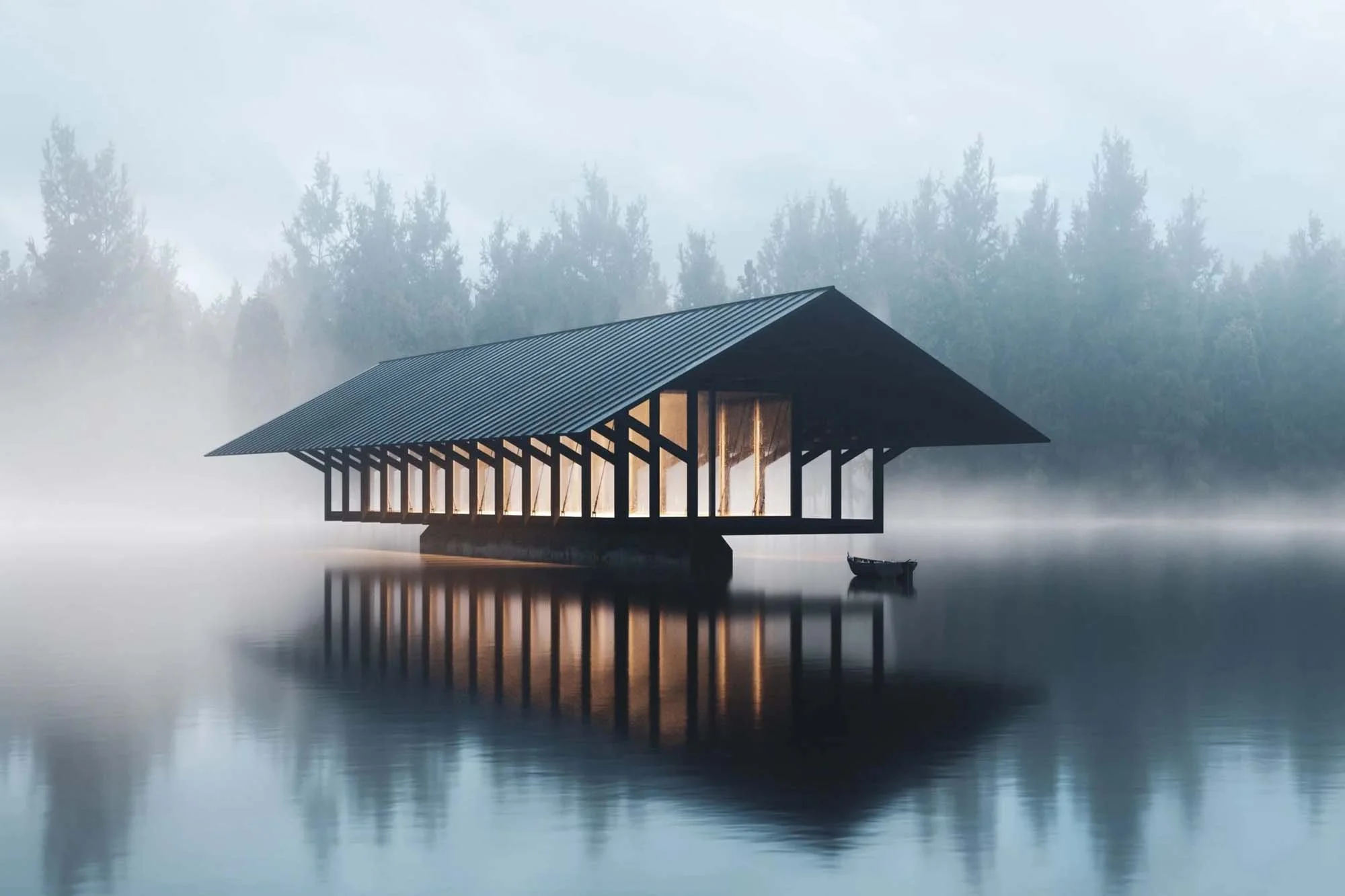
The pavilion sits within a 497-acre wild forest that includes a 32-acre man-made lake, streams, wetlands, and an old beaver pond. The surrounding moist woodland supports a diverse range of indigenous plant species, while the broader landscape is defined by rolling hills that rise sharply along the lake’s eastern edge. Within this setting, the pavilion is designed for quiet, collective use. It accommodates meditation, yoga, and small group therapy sessions, offering a space that supports focus and calm without isolating occupants from the environment.
Accessed only by boat, the building’s remoteness reinforces its function. Arrival is intentional, and use is slowed by design.
Architecture and Materials
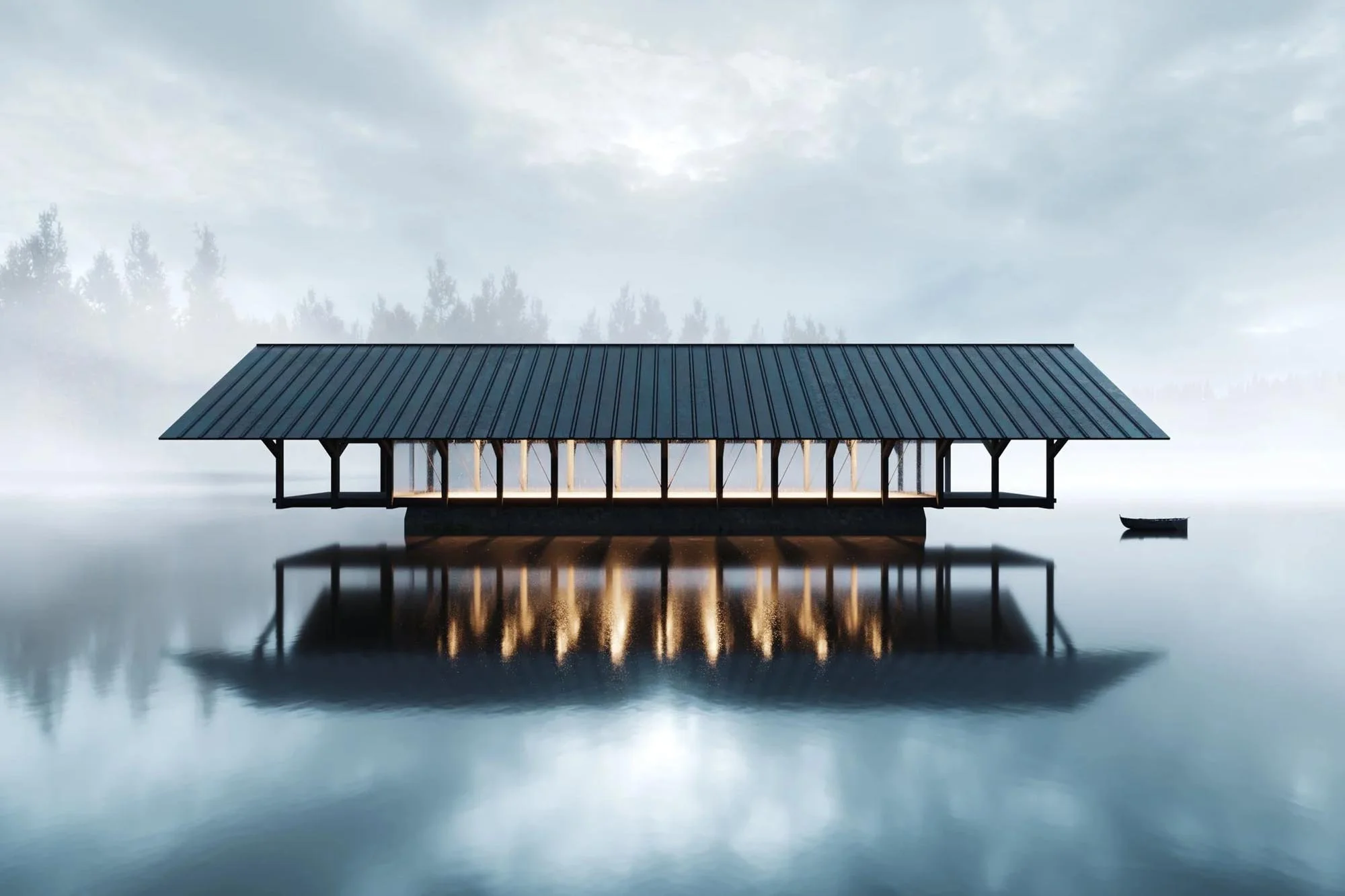
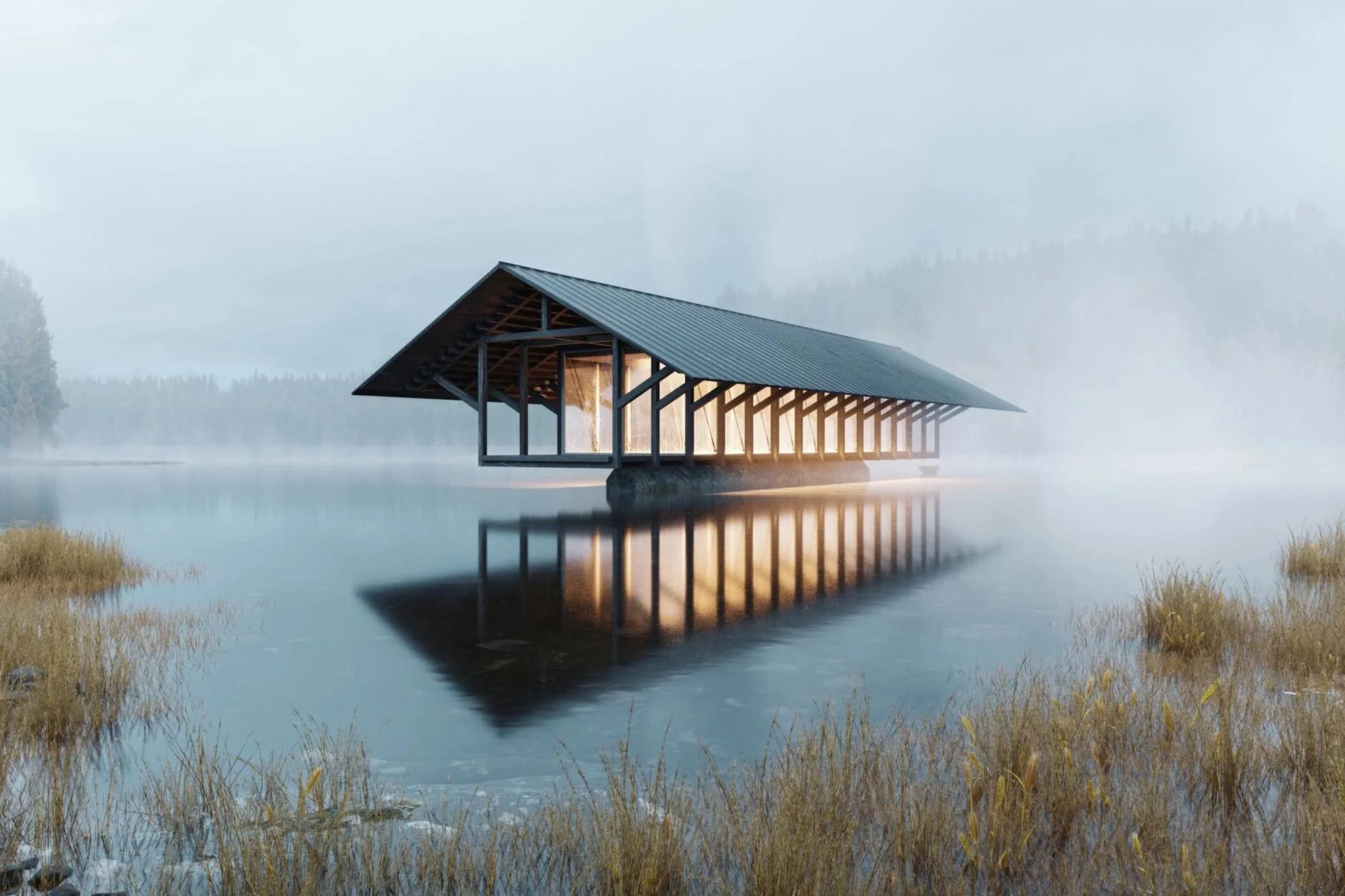
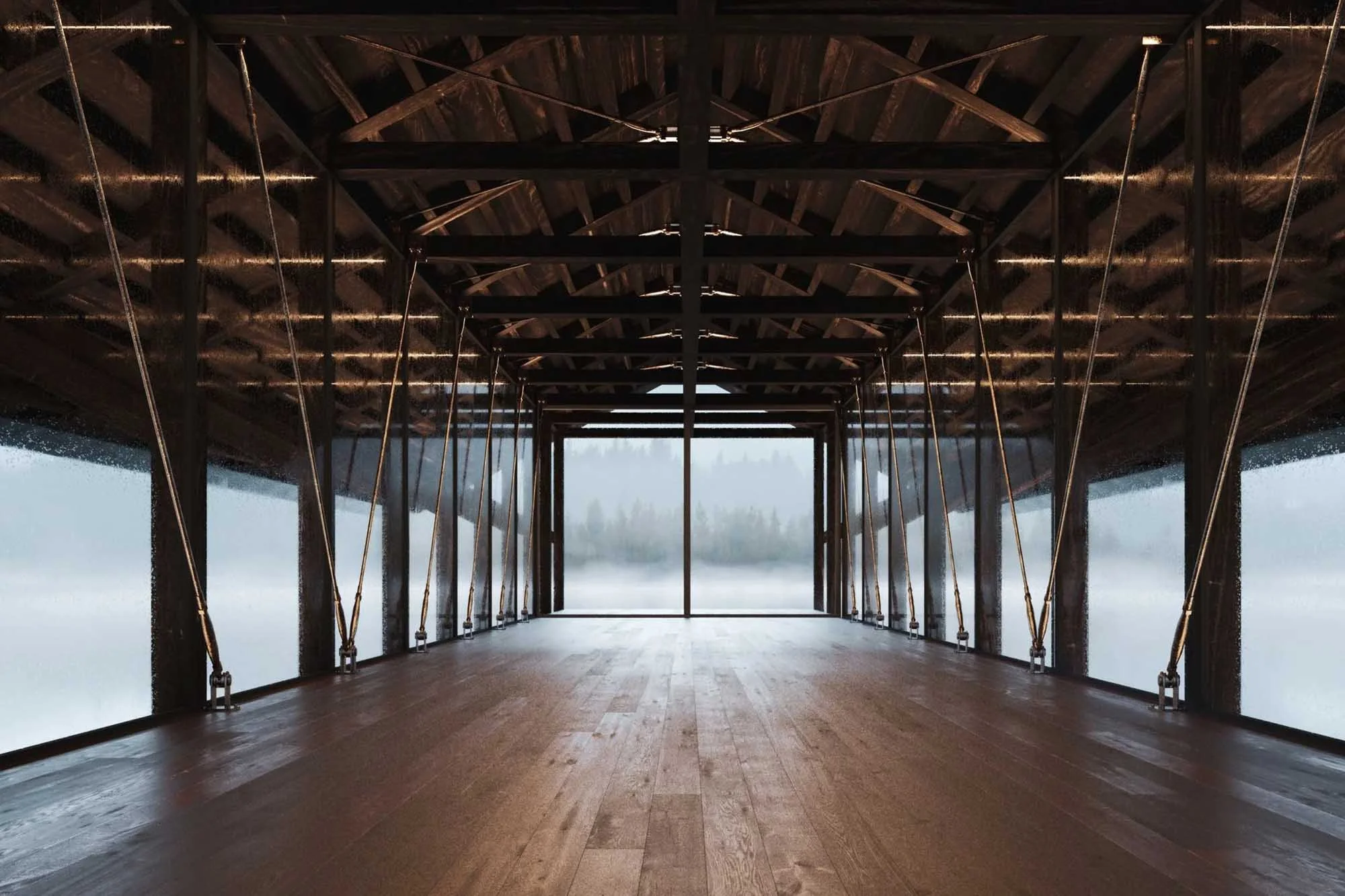
The pavilion’s form is linear and restrained, defined by a clear structural logic. Construction is based on an all-timber frame, complemented by light steel connections and a standing seam steel roof.
Traditional timber construction methods are central to the project. The structure employs a King Post system, with heavy timbers assembled using lap joints and pegged mortise-and-tenon connections. These techniques are left visible, reinforcing an understanding of how the building is made.
Material use is precise and limited:
Timber provides structural mass and tactile warmth
Steel is used sparingly for connection and stability
Glass forms an all-glass skin, allowing visual continuity with the lake and forest
Materials are largely untreated, allowing natural ageing and weathering to become part of the pavilion’s lifecycle. There are no decorative finishes.
Structural Expression
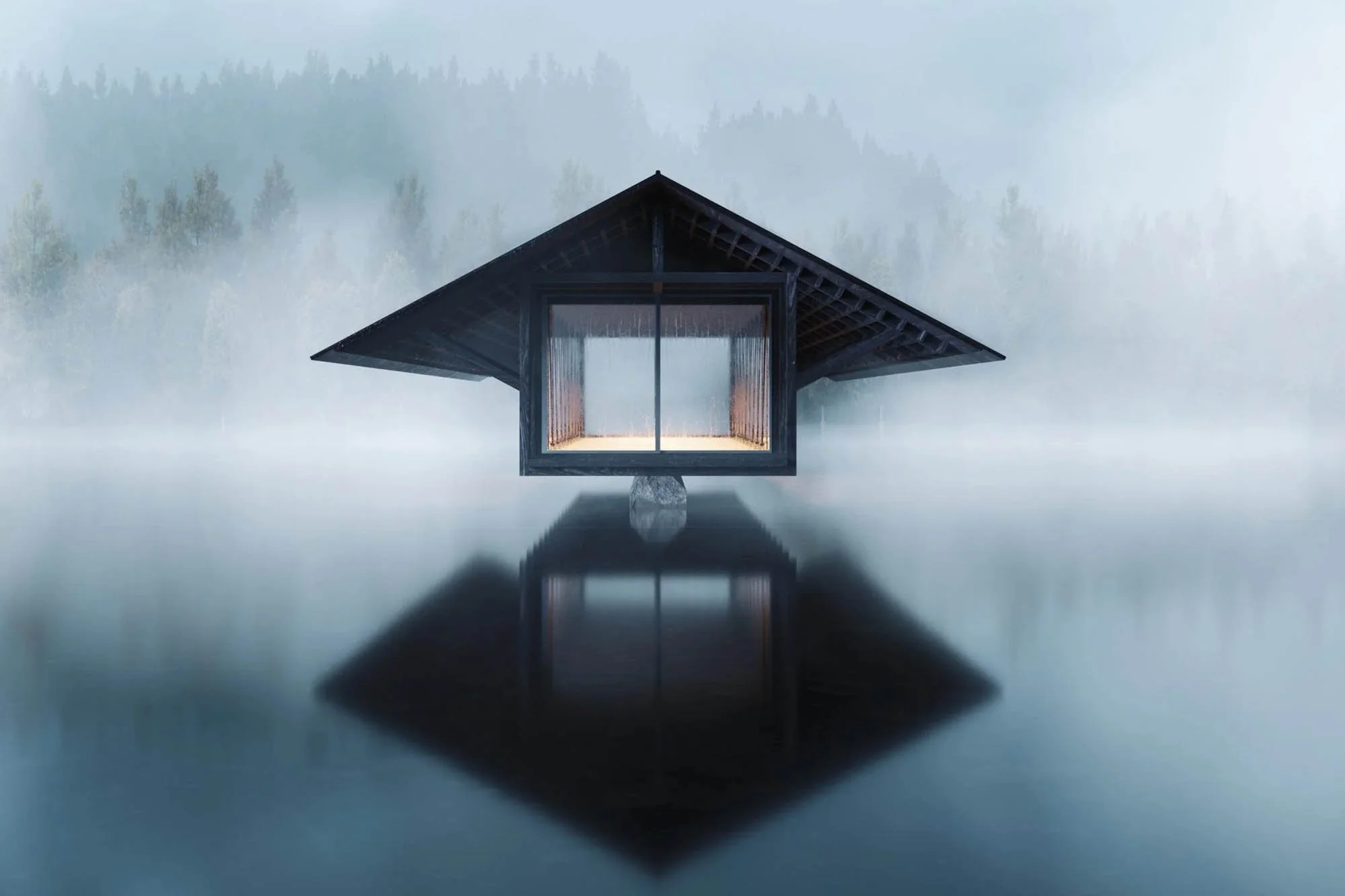
The defining structural element is the central timber post, which cantilevers from a single solid concrete pier anchored into the lake bed. This concentrated point of support allows the pavilion to extend over the water, creating the perception that it floats above the lake’s surface.
The triangulated roof structure is reflected in the water below, producing an optical lightness that contrasts with the physical weight of the timber construction. The result is a building that appears suspended – visually light, structurally exact.
Design Approach
The Crystal Lake Pavilion reflects Marc Thorpe Design’s broader architectural philosophy: buildings shaped by context, climate and use rather than visual trend.
Sustainability is addressed through siting, scale, and construction method. The modest footprint, durable materials, and traditional joinery reduce long-term environmental impact while ensuring longevity. Transparency is used not as spectacle, but as a means of maintaining continuous engagement with the surrounding ecology. This is architecture as problem-solving – quiet, disciplined and intentional.
Why It Matters
In contrast to highly expressive contemporary pavilions, the Crystal Lake Pavilion demonstrates restraint as a clear architectural position. Its success lies in siting, proportion, and structural honesty – qualities that age with credibility. The project does not attempt to dominate its setting. Instead, it clarifies it.
Pictures: Marc Thorpe Design
