Jil Sander × Thonet: The Discipline of an Edit
THE VARE SELECTION
Our considered edit of places, objects and ideas built on decisions that last.
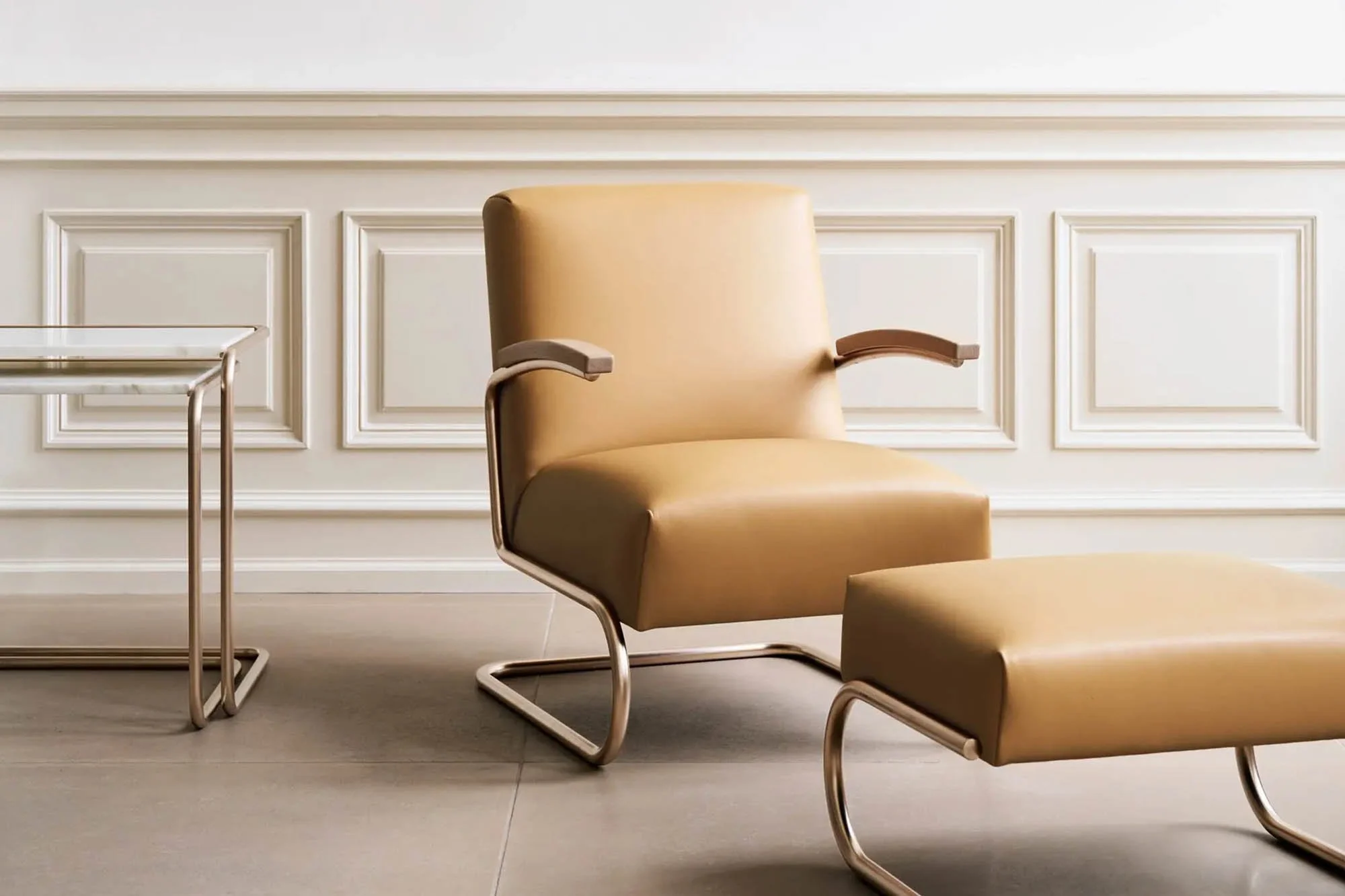
For 2026, Jil Sander expands JS . THONET with the S 411 lounge chair and S 1070 table. The additions make the logic of the collaboration clearer: established furniture is left structurally intact while material, colour and surface are recalibrated around it.
Jil Sander’s work with Thonet is easiest to understand through what she leaves alone. Marcel Breuer’s cantilever chairs remain unmistakably Breuer. The S 411 keeps the sweeping tubular-steel structure of the Thonet design developed in 1932. Even the S 1070, Glen Oliver Löw’s much later table from 2004, retains its basic construction of a slender curved steel frame supporting a broad horizontal top.
Sander concentrates her intervention elsewhere: in the reflectivity of the metal, the density of colour, the finish of timber, the upholstery and the line of a seam. That approach has become easier to read as JS . THONET, first presented in 2025, has expanded into a small furniture family. For 2026, the collection gains the S 411 lounge chair with matching footstool and the S 1070 table, both developed within its SERIOUS and NORDIC material schemes. They join Sander’s versions of the S 64 and S 32 cantilever chairs and the B 97 nesting tables.
Picture: Thonet
Jil Sander’s first furniture collaboration
Jil Sander’s collaboration with Thonet marked her first move into furniture design. It began with some of the manufacturer’s best-known tubular-steel pieces, including Marcel Breuer’s S 64 from 1929/30, alongside the armless S 32 and Thonet’s B 97 tables from 1933.
The premise was not to conceal where these designs came from.
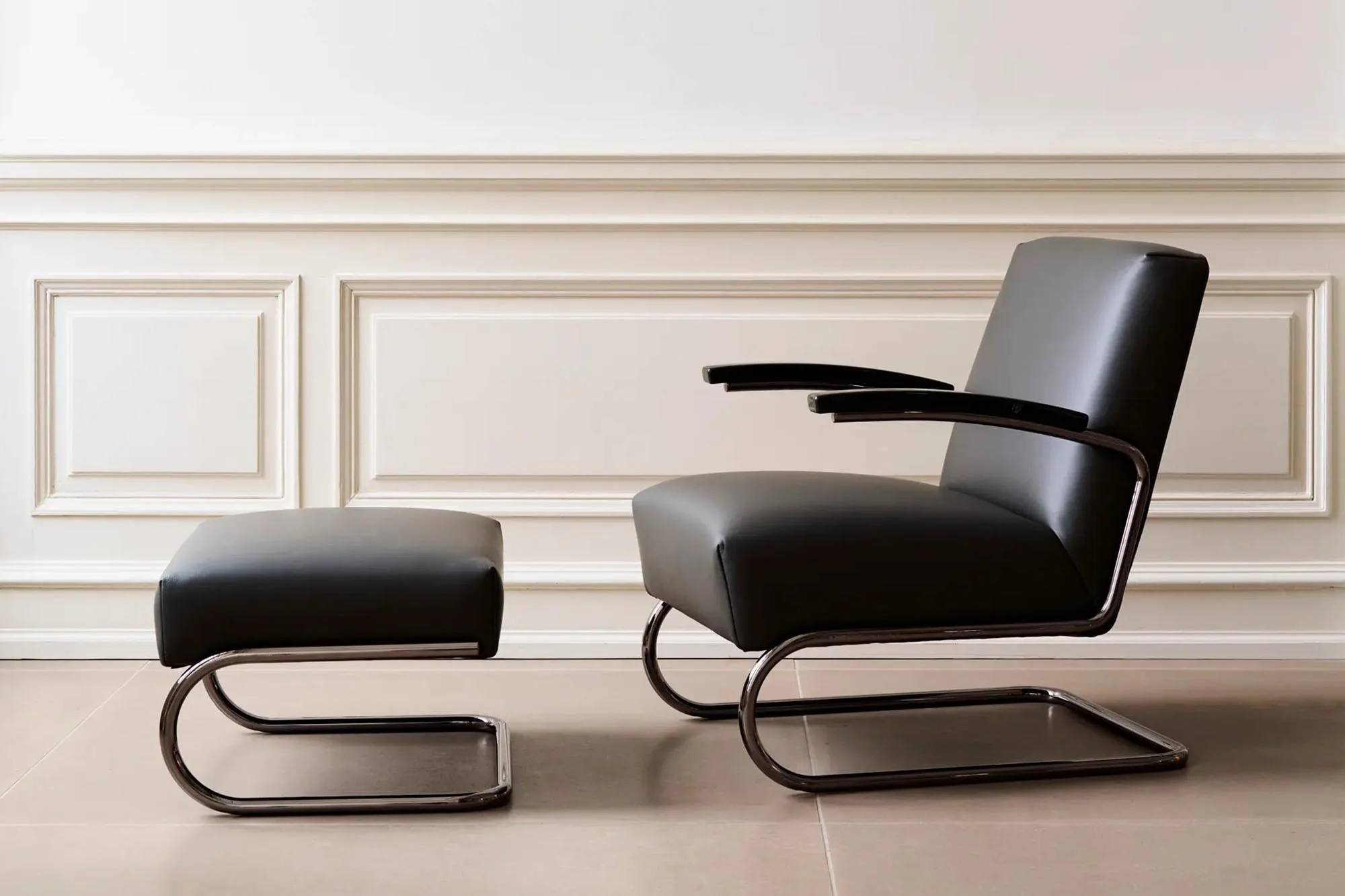
Instead, Sander worked through the kinds of decisions that have long mattered in her fashion: material, surface, exact colour and the relationship between small details. In SERIOUS, the steel takes on a glossy titanium-like finish. Leather appears in Graphite Black, Graphite Ruby Red, Graphite Green and Graphite Blue, with corresponding high-gloss wooden elements.
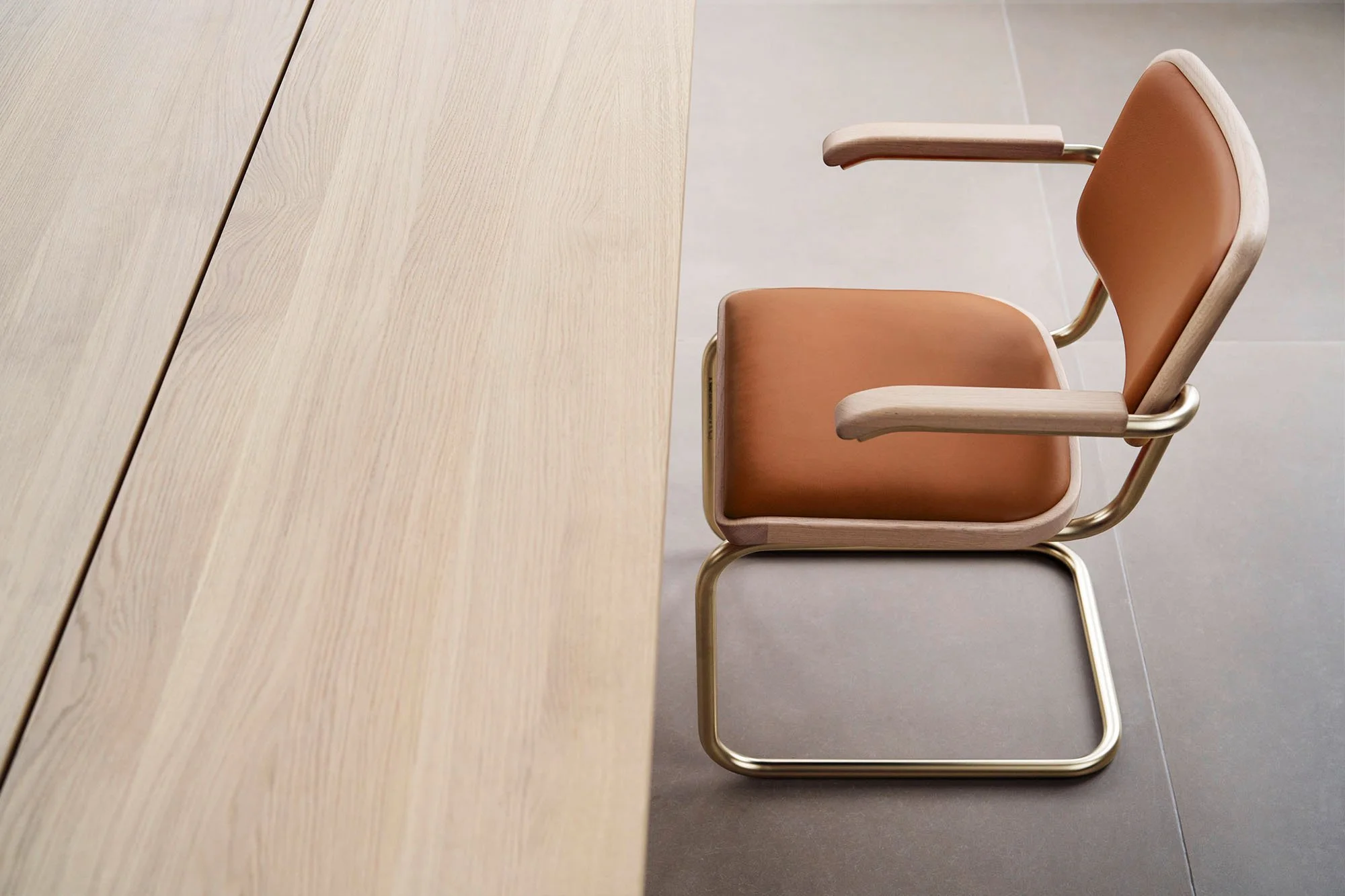
NORDIC changes the atmosphere through material rather than form. Its frames use warm matt nickel silver, paired with white-pigmented oak and leather in Light Caramel, Burnt Walnut or Alabaster White. The S 64 and S 32 are also available with canework, maintaining one of the materials most closely associated with Thonet’s modernist furniture.
Sander has pointed to the lacquer of a Steinway grand piano, the leather upholstery of an English car and the matt nickel silver used in architectural elements as references. The examples are revealing because they are all about finish and perception: how a surface catches light, how a material feels, and how those qualities alter the presence of an object.
The S 411 and S 1070
The 2026 S 411 makes that method particularly easy to see. Developed by Thonet in 1932, the lounge chair has a curved S-shaped tubular-steel frame that continues into the arm supports. Its sprung upholstery gives it a fullness absent from the more skeletal tubular-steel chairs of the late 1920s; Thonet itself places the design at the beginning of a broader move towards more generously upholstered steel furniture during the following years.
Sander has not attempted to strip that character away. Her version reduces the stitching and applies the SERIOUS and NORDIC finishes to the existing construction. The result changes the visual weight of the chair without obscuring what made the original distinctive.
The S 1070 applies the same method to a different generation of Thonet furniture. Designed by Glen Oliver Löw in 2004, the table draws on early Bauhaus tubular-steel furniture, particularly Marcel Breuer’s B 9 tables. Its curved steel frame carries a 220-by-100-centimetre top divided lengthwise into two panels. Sander uses that division as a colour device. In SERIOUS, the two sections can share one high-gloss tone or combine different colours from the collection. NORDIC pairs the matt nickel-silver frame with white-pigmented oak.
Picture: Thonet
SERIOUS and NORDIC
The distinction between the two material schemes becomes more useful as the collection expands.
SERIOUS works with polished metal, deep colour and reflection. NORDIC shifts towards pale timber, warmer metal and softer leather tones. The same approach can move from a Breuer cantilever chair to an upholstered Thonet lounge chair and then to Löw’s S 1070 without making those objects appear as if they belong to the same period.
The materials provide continuity, but the differences between the original designs remain visible.
That matters because JS . THONET now brings together furniture conceived around 1930 with a table designed more than seven decades later. The collection does not depend on a single author or historical moment. Its coherence comes from Thonet’s long use of tubular steel, combined with Sander’s tightly controlled treatment of surface, colour and material.
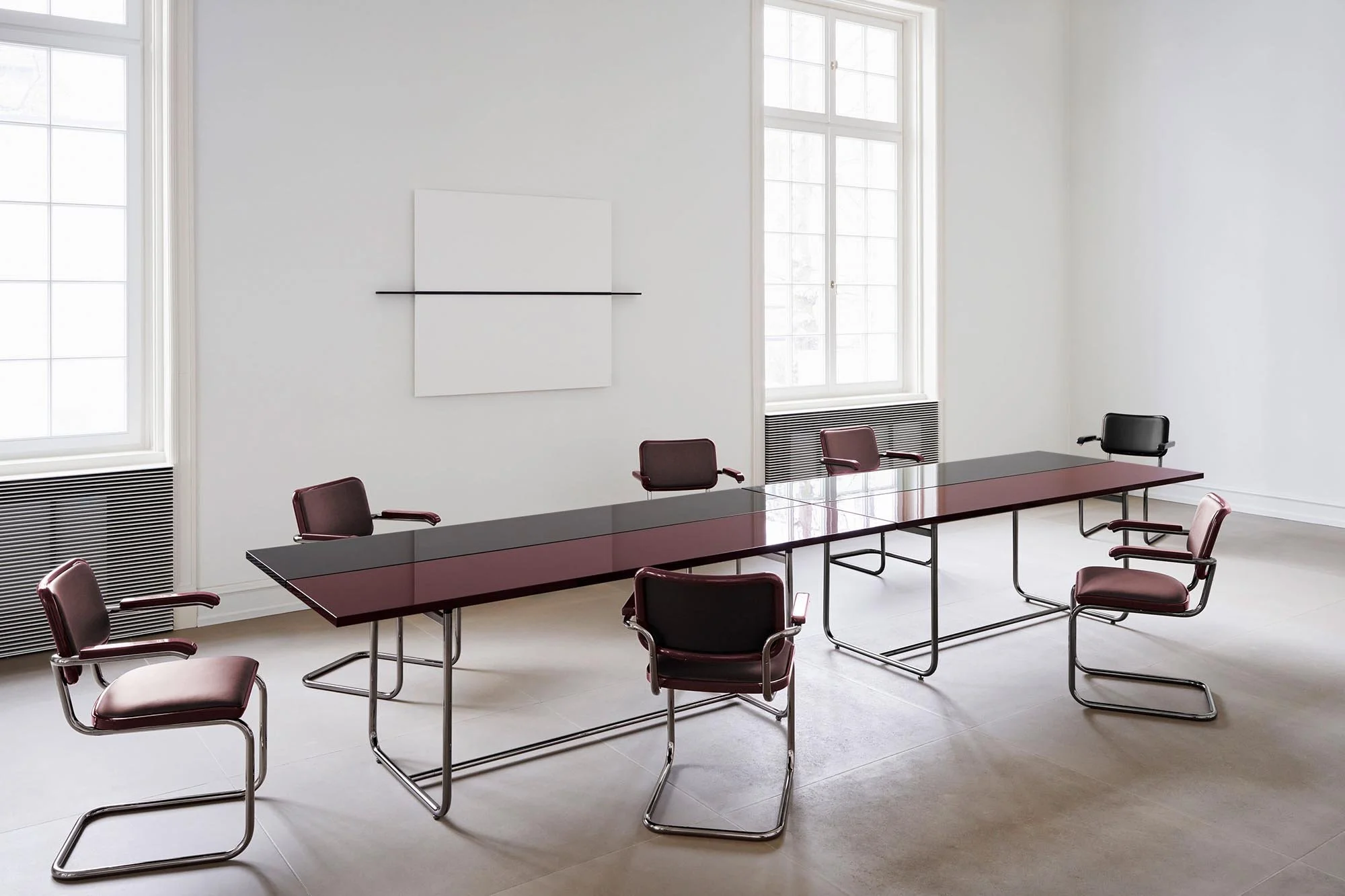
Picture: Thonet
Thonet across different eras
The 2026 expansion shows how far Sander’s approach can stretch without losing its precision. It works on the upholstered volume of the S 411 as naturally as it does on the broad horizontal plane of the S 1070.
What holds the collection together is not a single period, author or typology, but a consistent attention to surface, colour and material. The individual designs remain recognisable, with their original proportions and histories intact.
That restraint gives JS . THONET its character. Rather than pulling Thonet’s furniture into a new visual identity, Sander allows each piece to remain itself, while changing how it sits in the present.
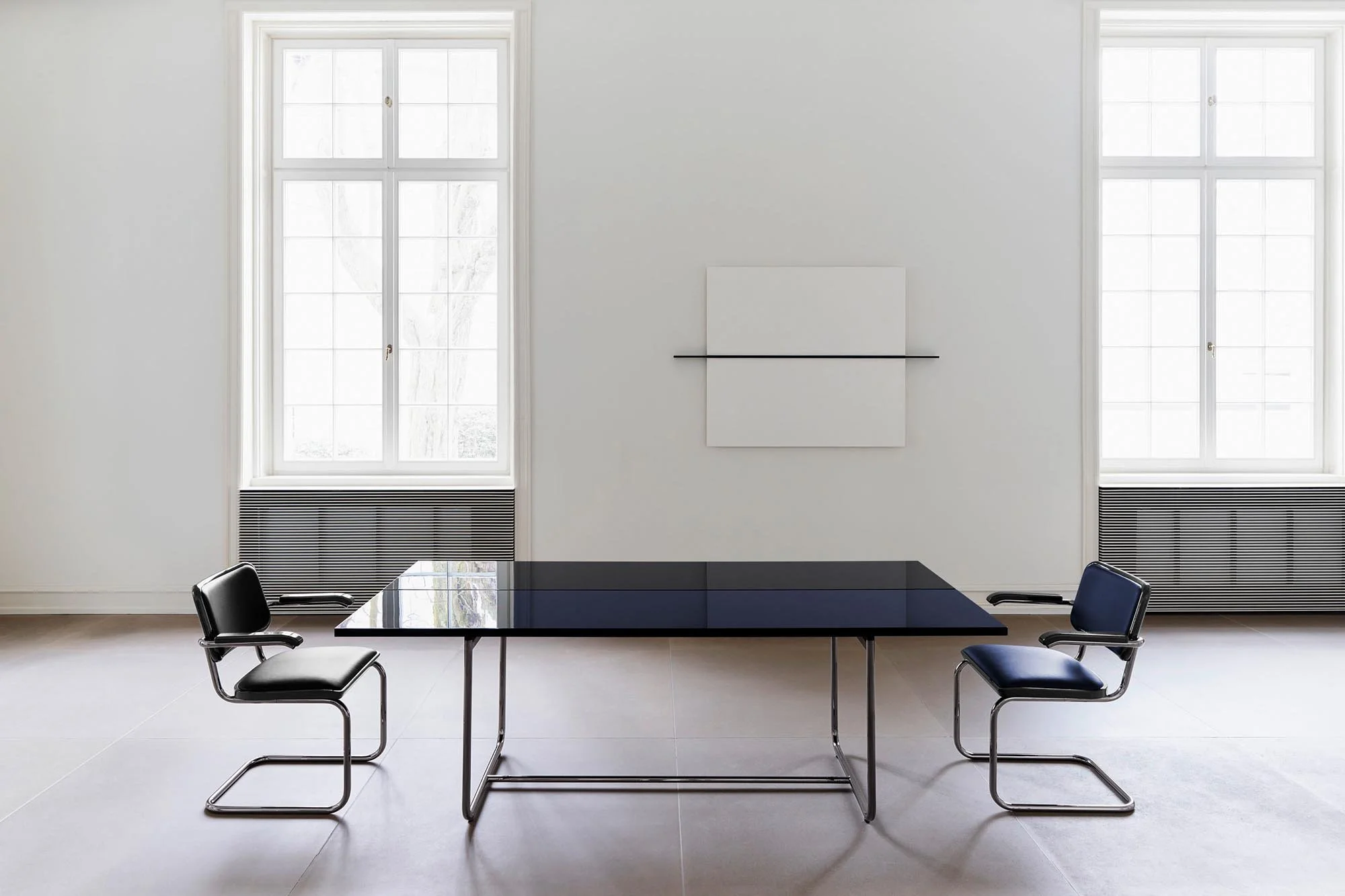
Picture: Thonet
