
Five European Hotels Built on Design
THE VARE SELECTION
Our considered edit of places, objects and ideas built on decisions that last.
By 2026, most travellers won’t be looking for more options – just better ones. The hotels that matter now are those built on decisions that last: architecture that belongs to its setting, interiors shaped by restraint and concepts that don’t require constant reinvention. This article highlights five design-led hotels in Europe that combine architecture, location and long-term relevance and remain worth travelling for in 2026.
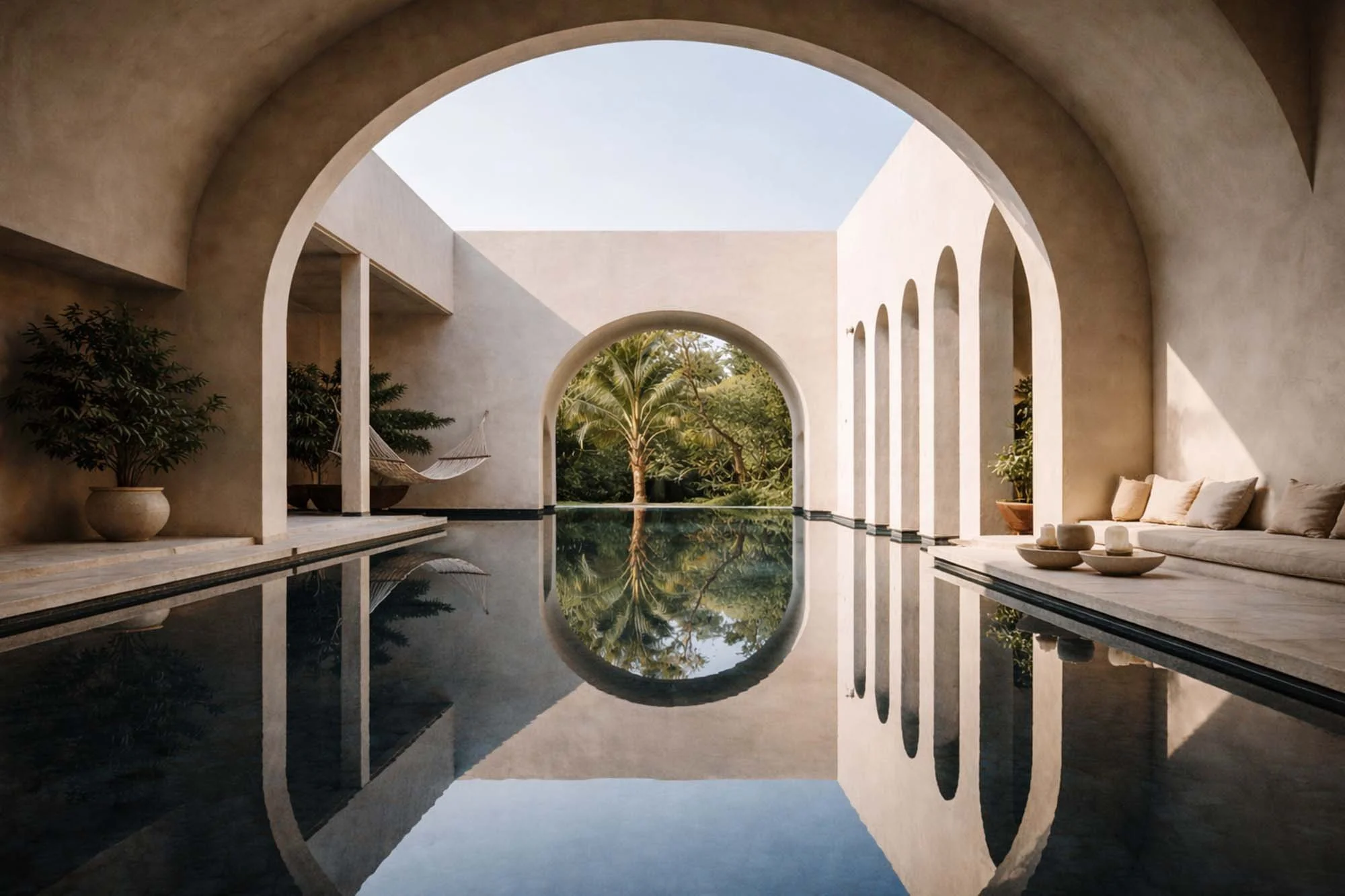
Forestis – Design-Led Hotel in the Dolomites
South Tyrol, Italy
Forestis occupies a former sanatorium site at 1,800 metres above sea level, overlooking the Puster Valley. The hotel is defined by three timber towers, positioned deliberately to preserve views, light, and distance between guests. Their verticality responds to the surrounding forest rather than the valley below.
Interiors are restrained and consistent across categories. Materials remain untreated; colour is muted. Rooms follow identical layouts, prioritising equality of experience over hierarchy. The spa concept is intentionally limited, structured around altitude, climate, and recovery rather than extensive treatment programmes. Read more about Forestis here.
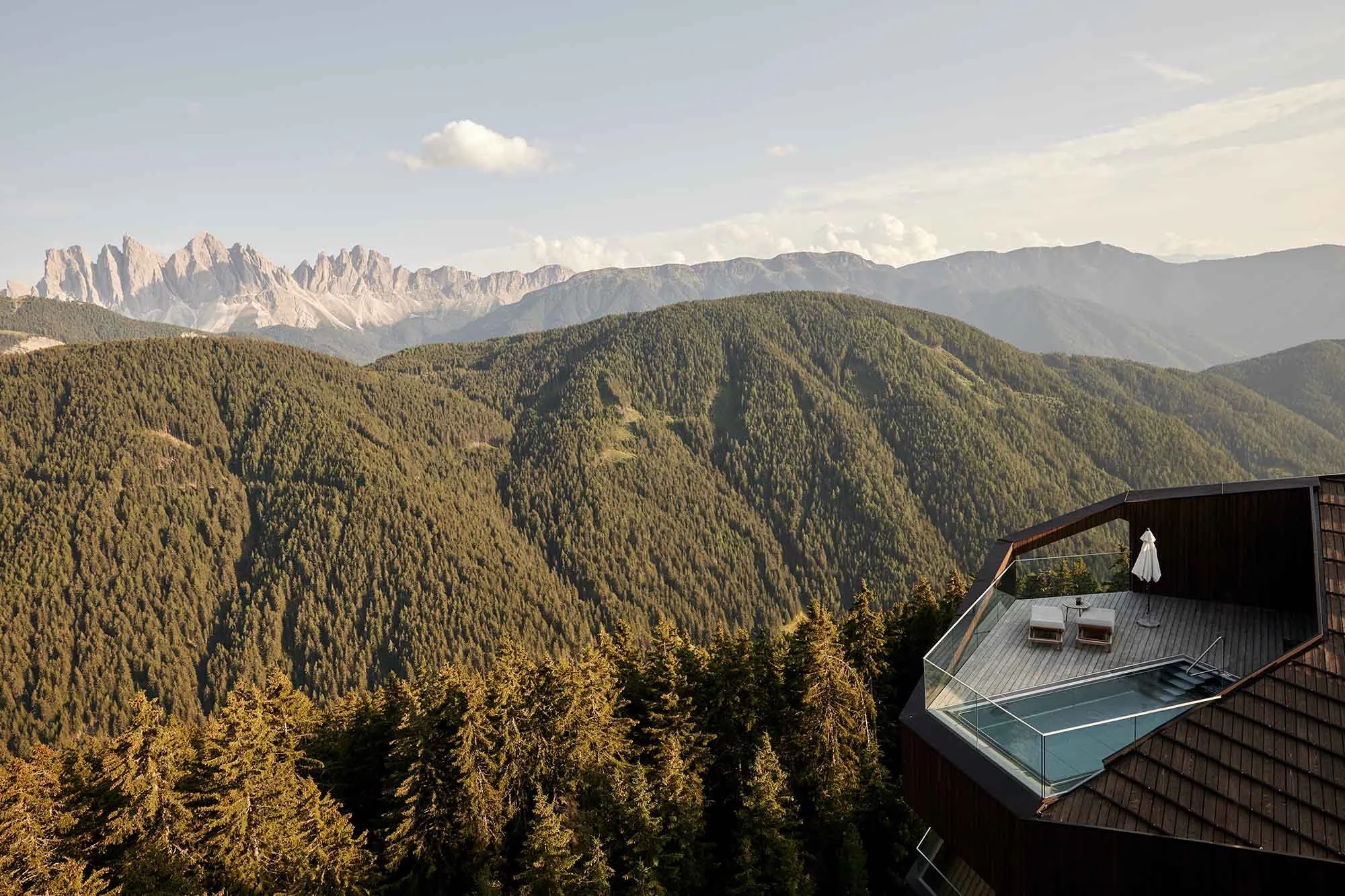
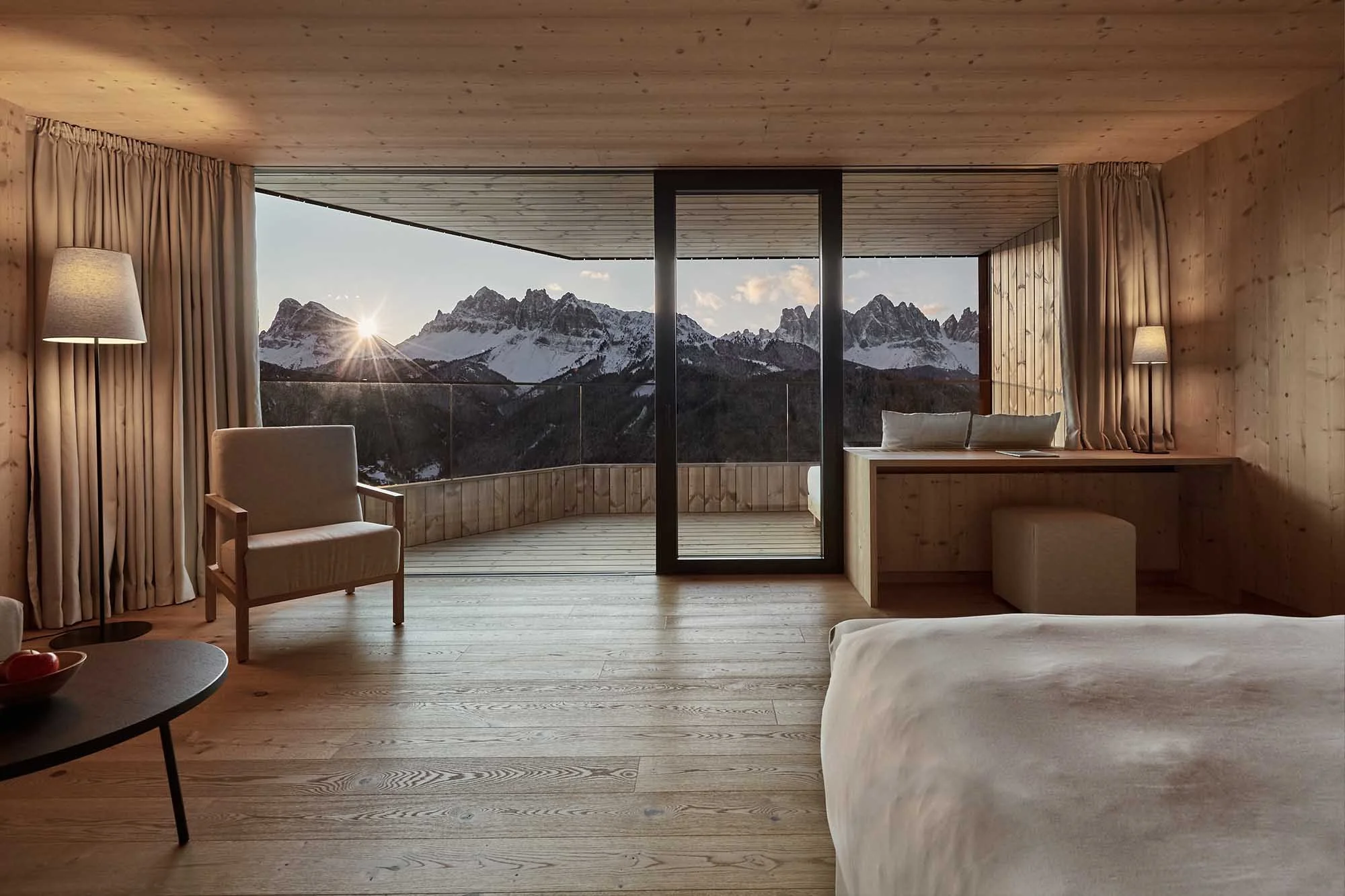
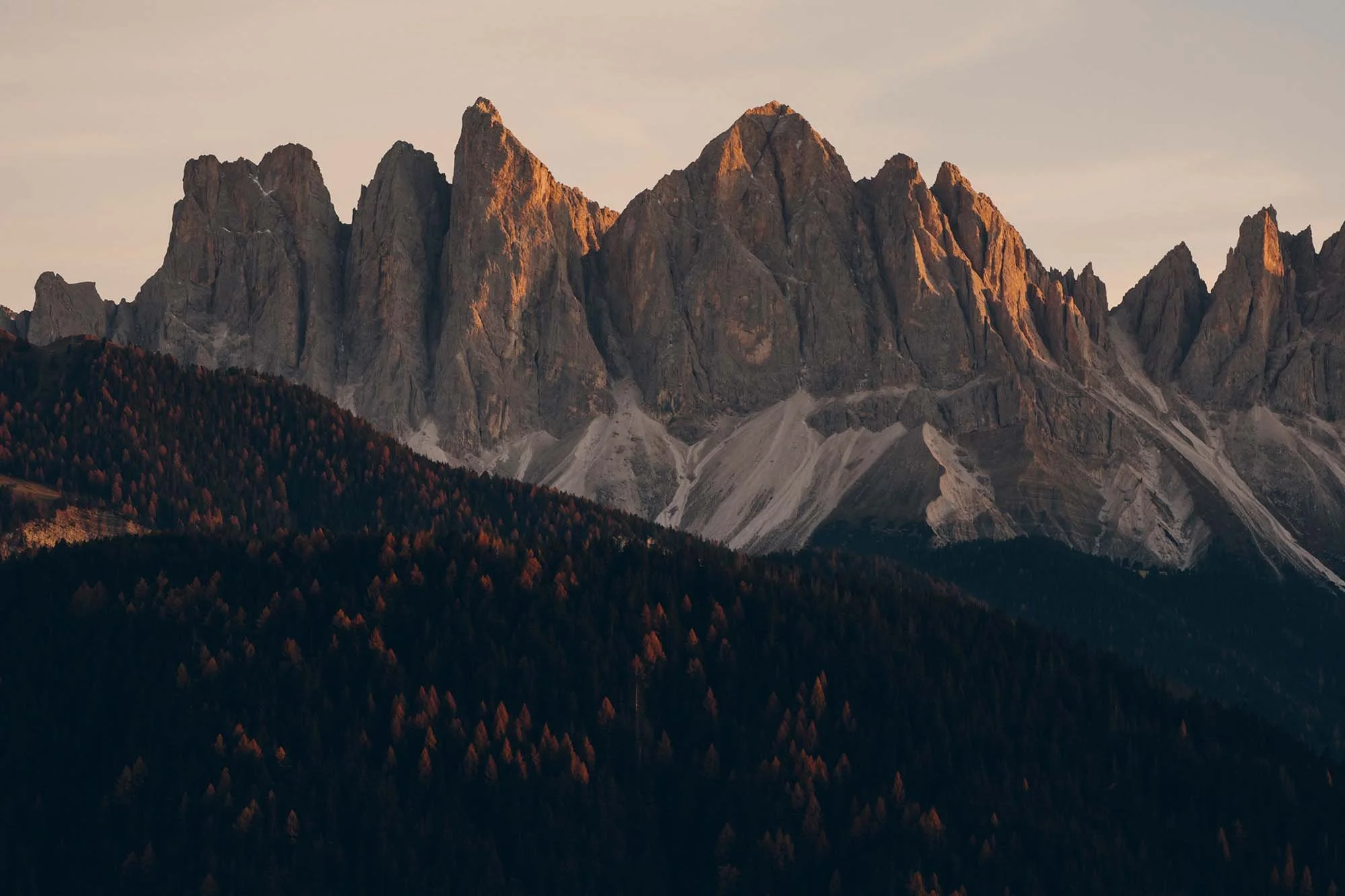
Pictures: Forestis
Acro Suites – Architecture-Led Hotel on the Cretan Coast
Crete, Greece
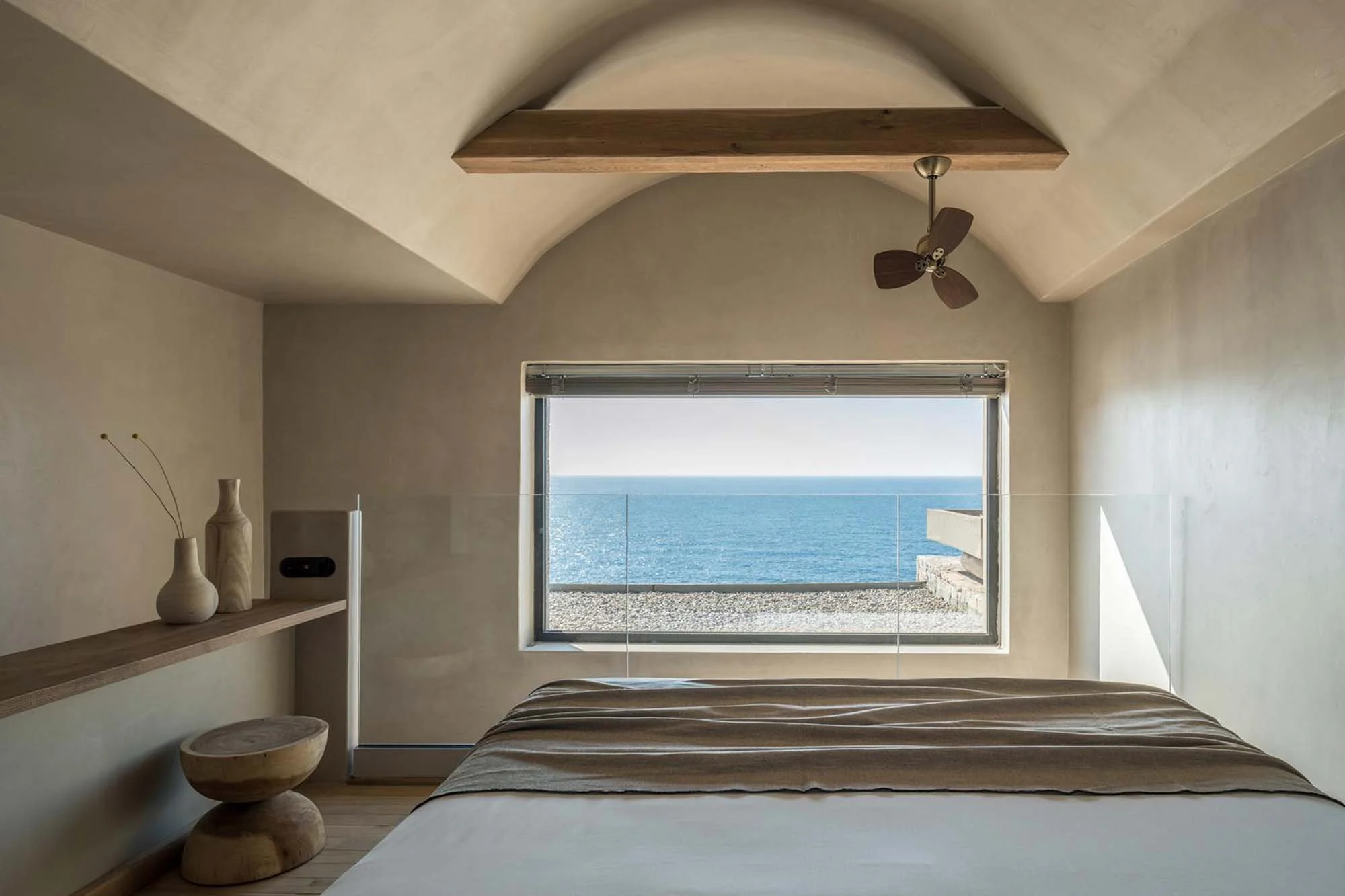
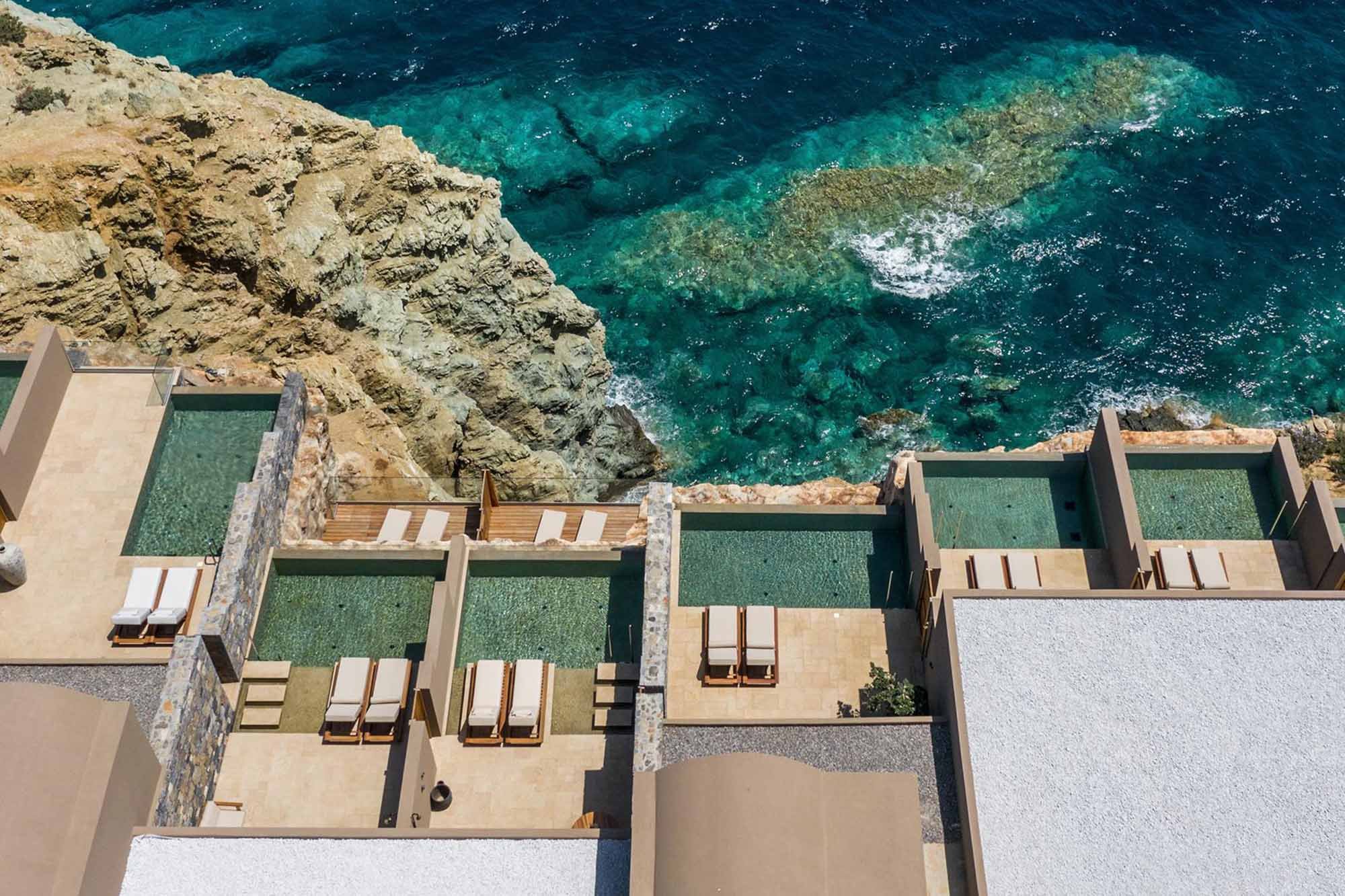
Built directly into the cliffs above Agia Pelagia, Acro Suites uses mass and enclosure as its primary architectural language. Thick stone walls, recessed openings, and controlled sightlines reference traditional Cretan construction while avoiding pastiche.
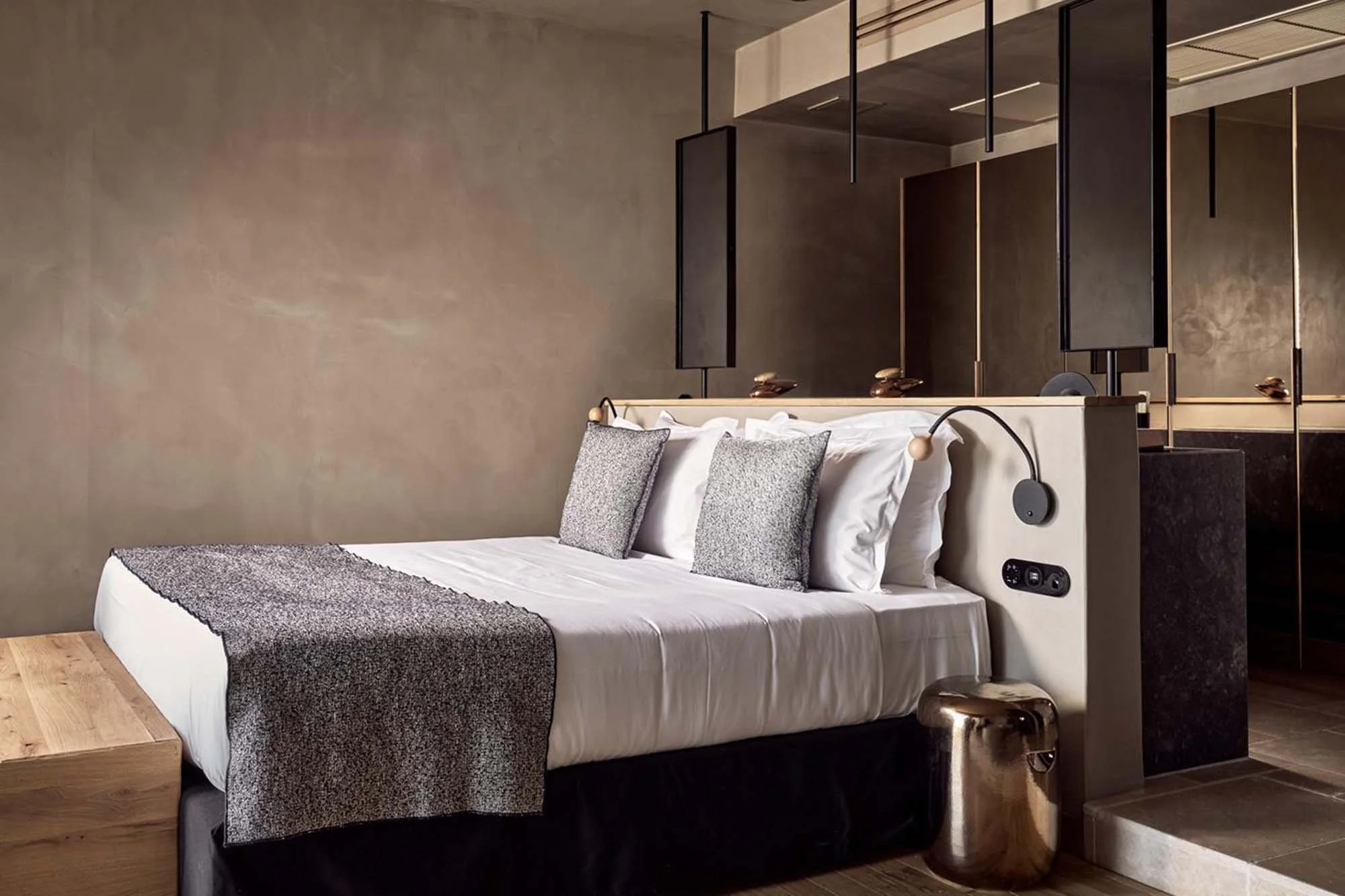
Each suite is self-contained, with uninterrupted sea views and private outdoor space. Circulation is fragmented rather than centralised, reducing visual overlap and encouraging withdrawal over sociability. Decoration is minimal; material continuity carries the design.
Picture: Acro Suites
Hotel Miramonti Boutique Hotel – Boutique Design Hotel Above Merano
South Tyrol, Italy
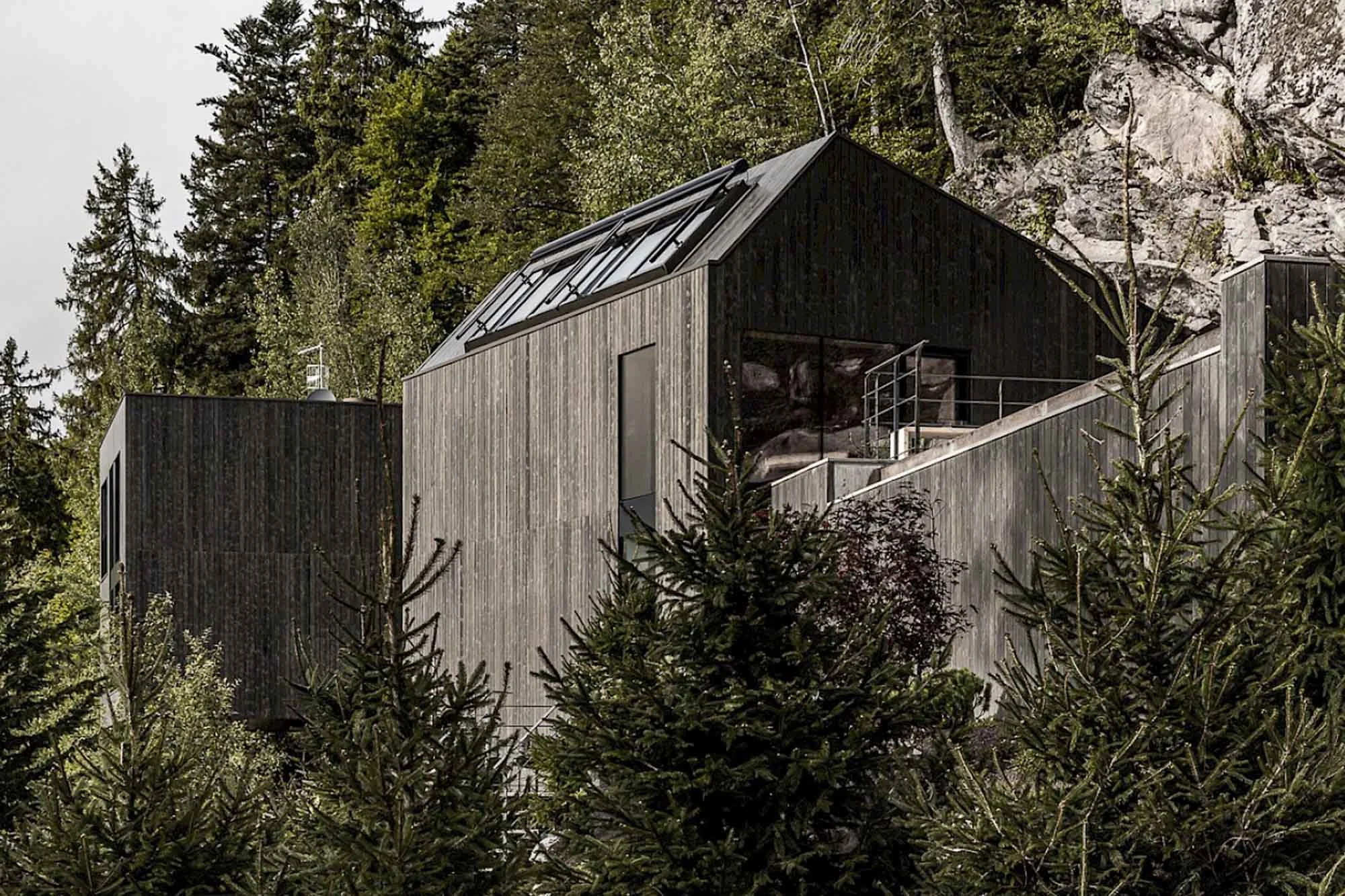
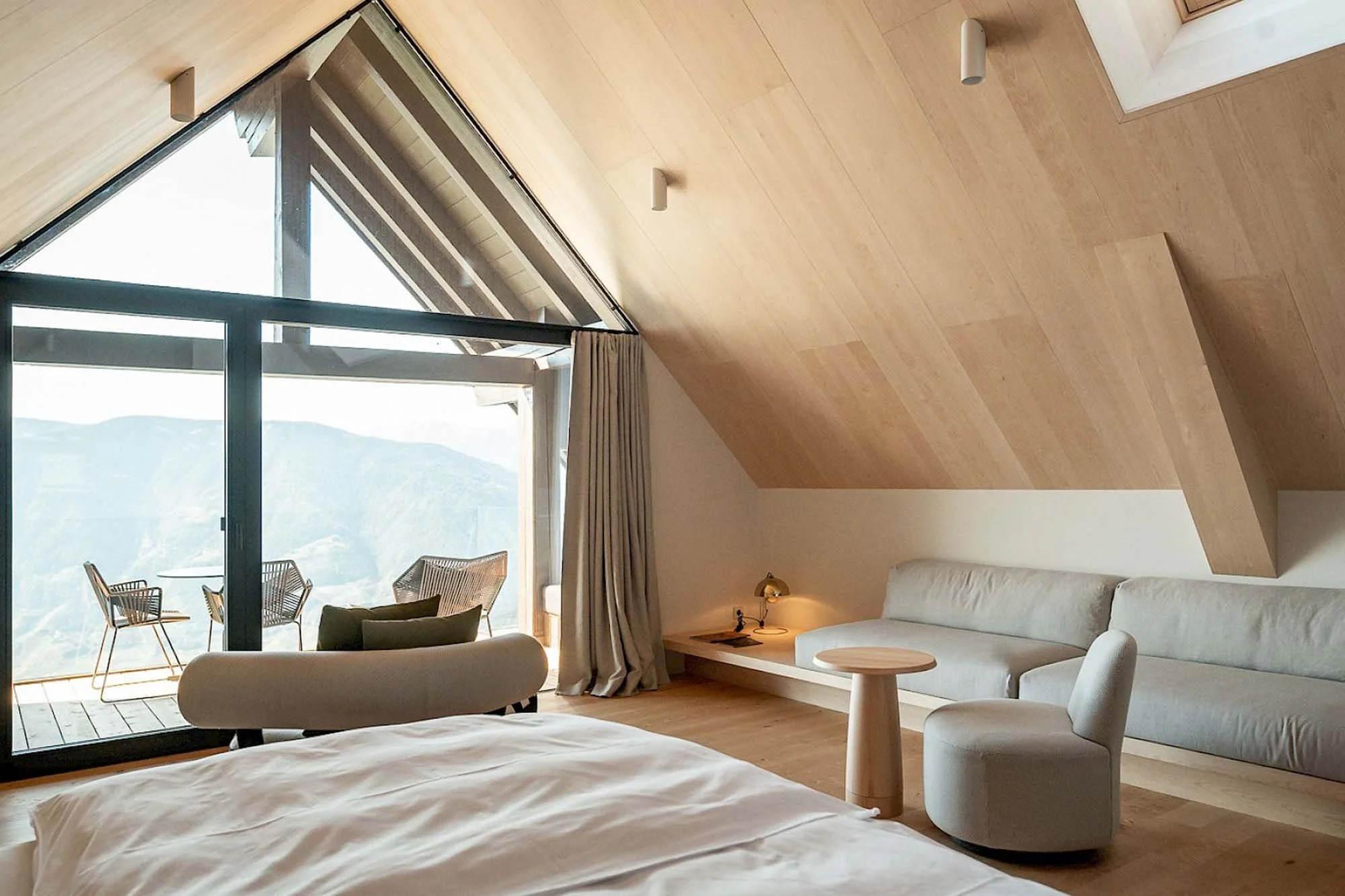
Hotel Miramonti sits above Merano and has resisted the cycle of constant redesign common in alpine hotels. Its interior language – dark surfaces, framed panoramas, controlled lighting – has been refined incrementally rather than replaced.
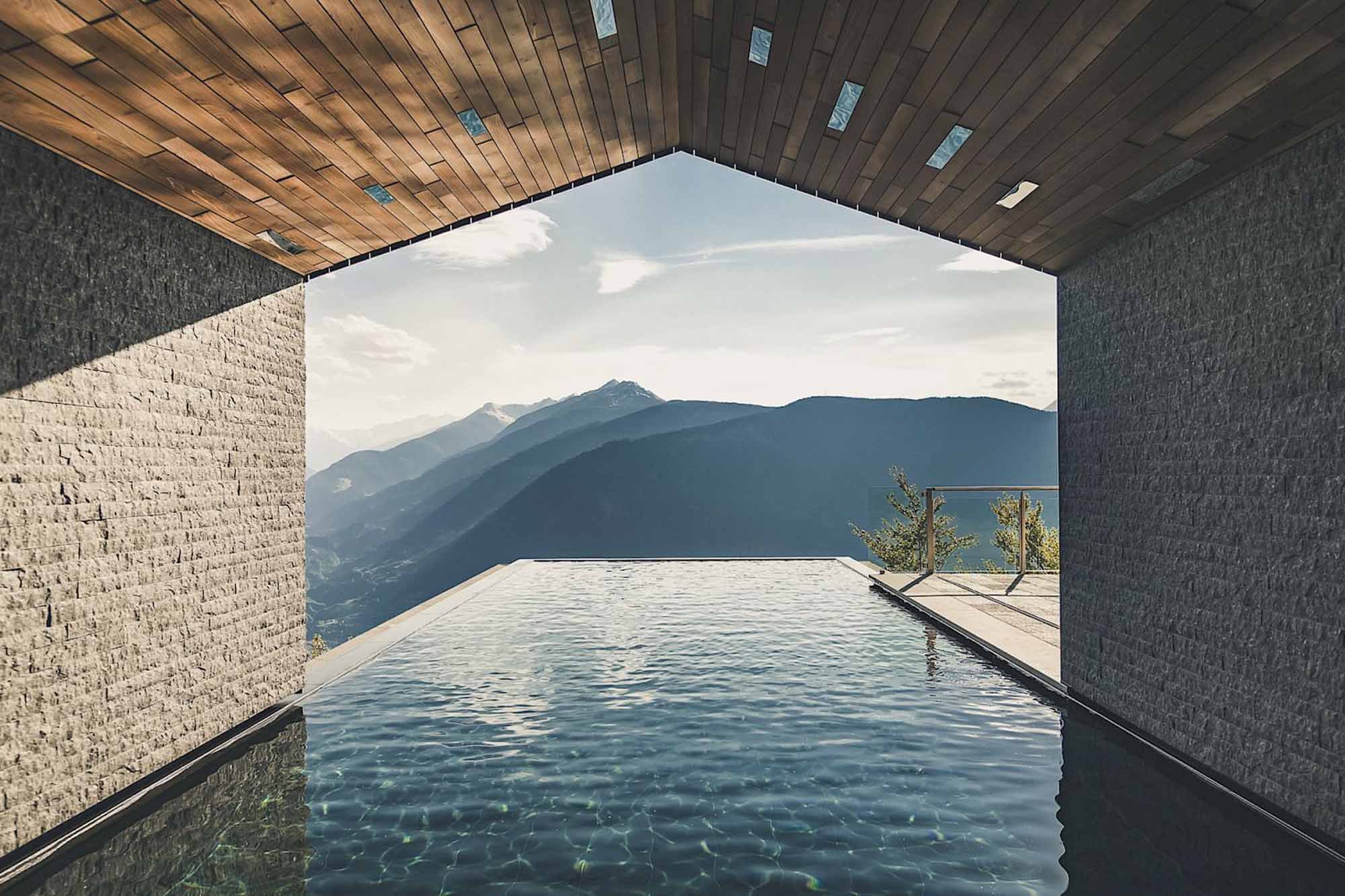
The infinity pool, positioned directly against the mountain slope, remains one of the most referenced in the region, integrated into the terrain rather than elevated above it. Rooms prioritise proportion and outlook over size.
Pictures: Miramonti
The Lodge Mallorca – Design-Focused Inland Hotel in Mallorca
Mallorca, Spain
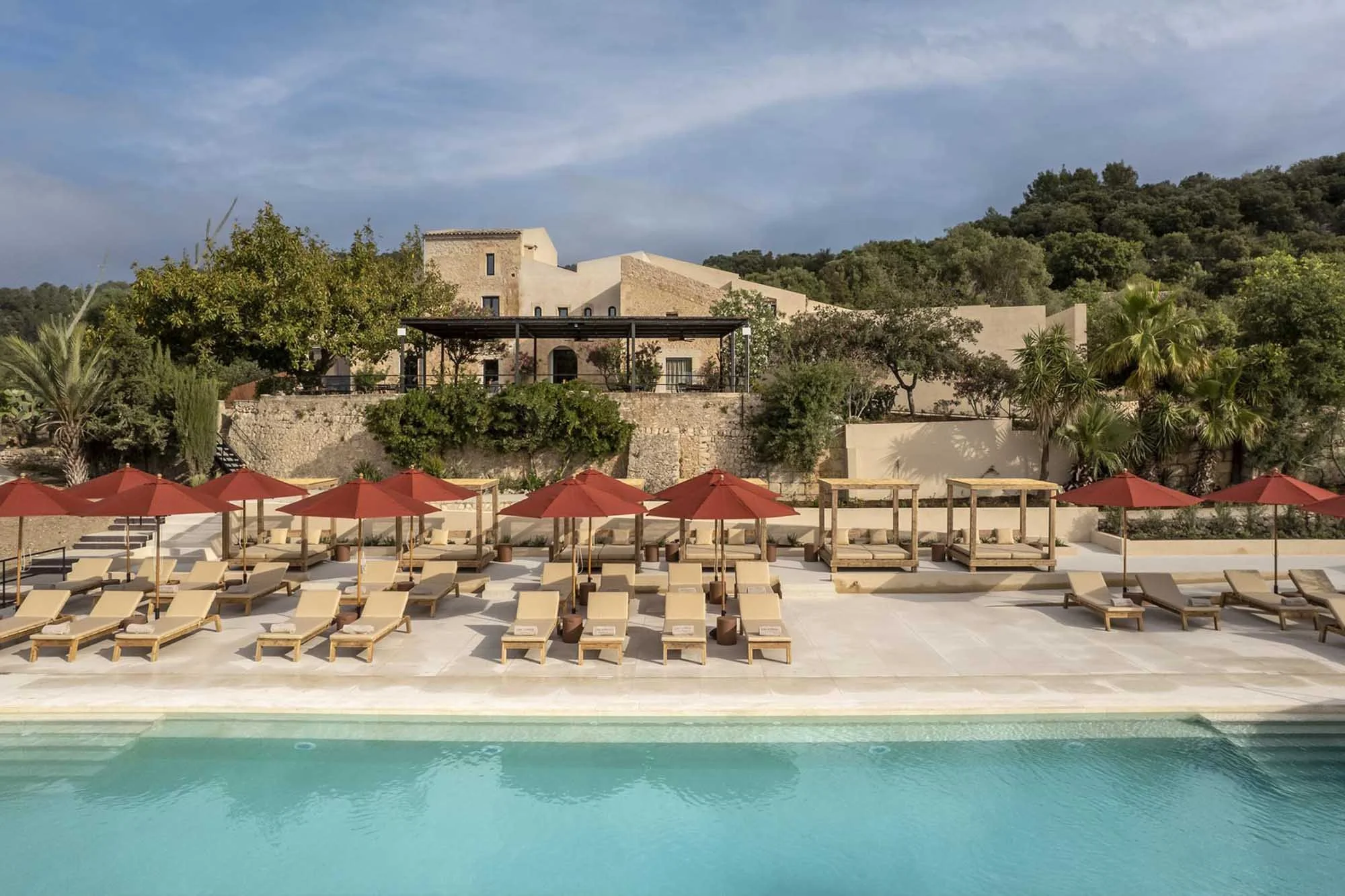
The Lodge Mallorca is intentionally inland, set within agricultural land far from the island’s coastal concentration. The architecture is low-profile and rural in tone, designed to sit within its environment rather than reframe it.
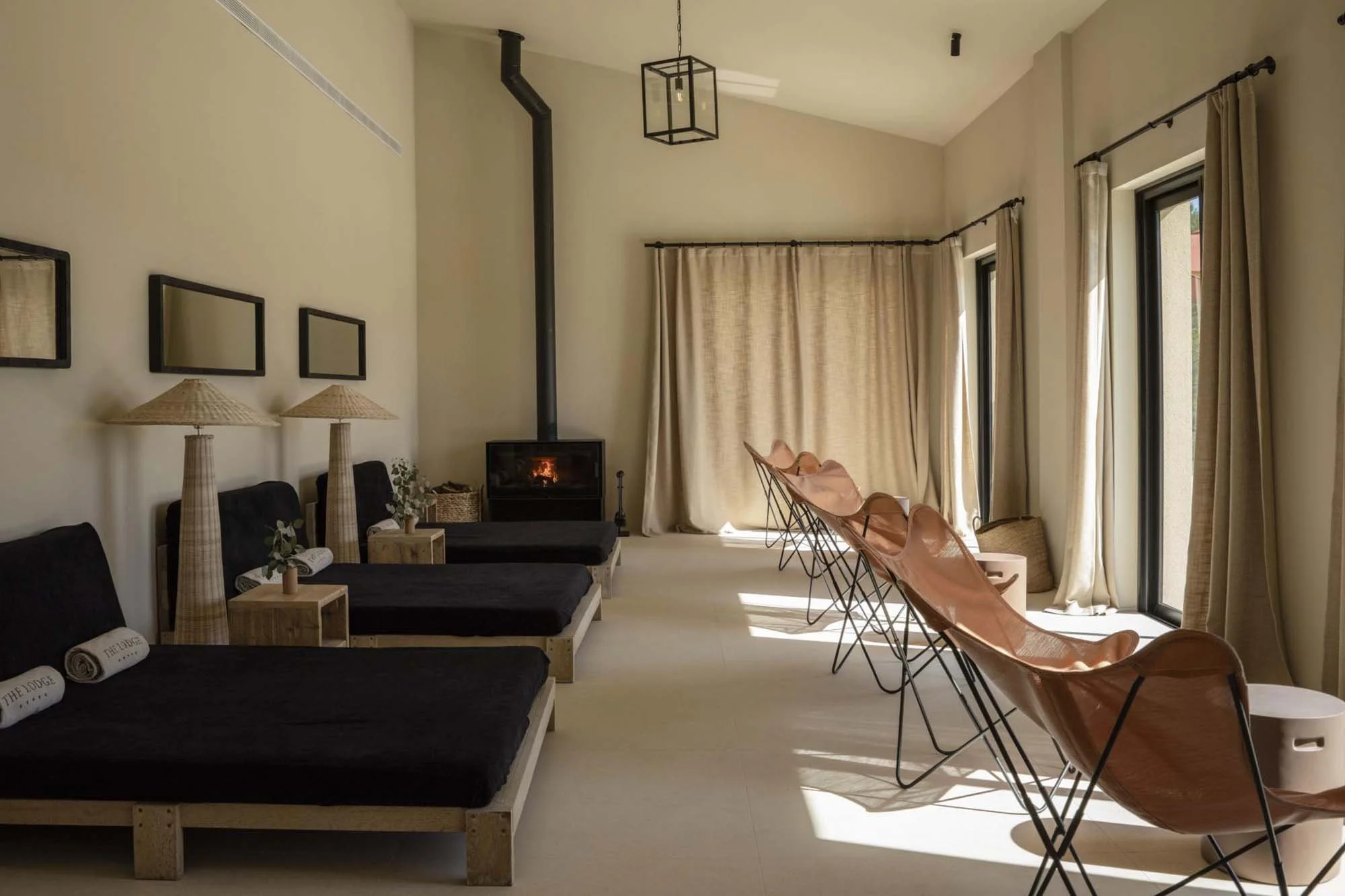
Interiors emphasise material weight and proportion: stone floors, timber, neutral textiles. Social spaces are calm and understated, without visual performance or programmed activity.
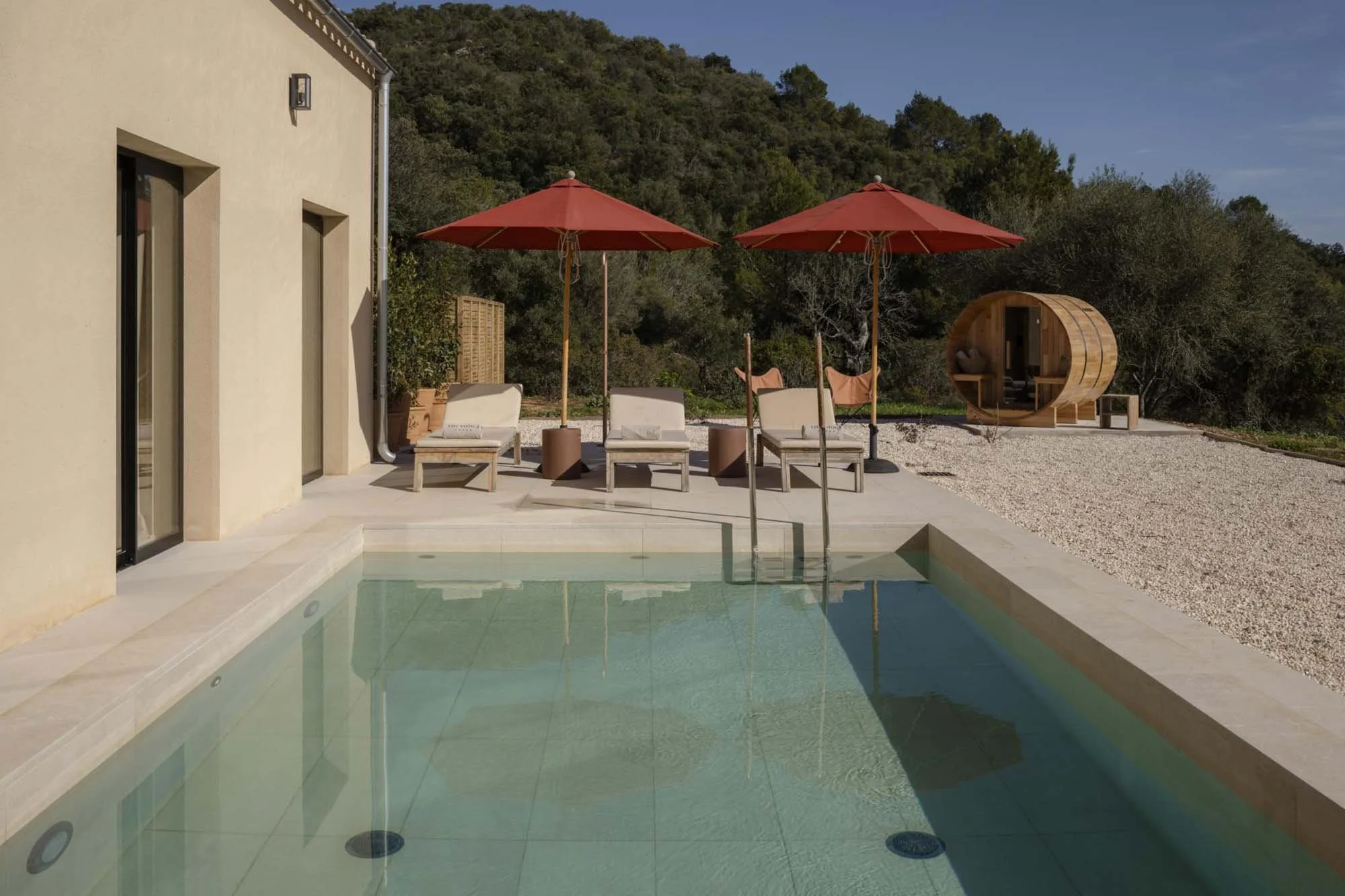
Pictures: The Lodge
Le Couvent des Minimes – Heritage Hotel with Architectural Discipline
Provence, France
Le Couvent des Minimes is located in a 17th-century monastery overlooking the Luberon, whose original structure has been largely preserved. The layout, symmetry and proportions follow monastic logic and have been preserved through a renovation strategy that favoured continuity over reinterpretation. Rather than imposing a contemporary signature, the design allows the original order of the building to remain recognisable.
The interventions in the interior are minimal and tonal. The materials are sourced locally, the surfaces are understated and the contrasts deliberately muted. The spa, which is influenced by botanical research, extends the monastery's historical relationship with care and rituals without theatrical distraction. Here, the design functions as a structure, not a statement – an atmosphere characterised by restraint, coherence and time.
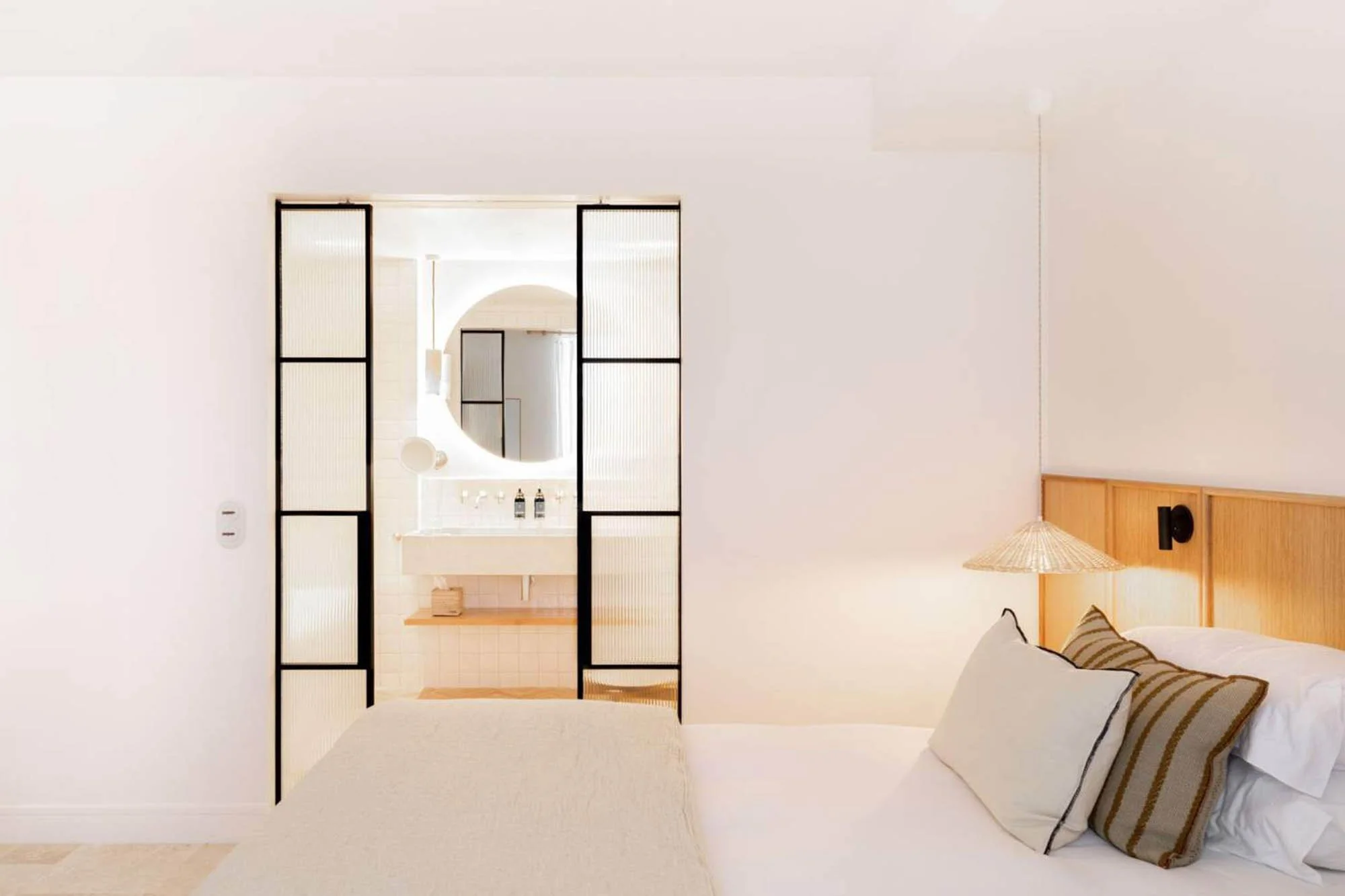
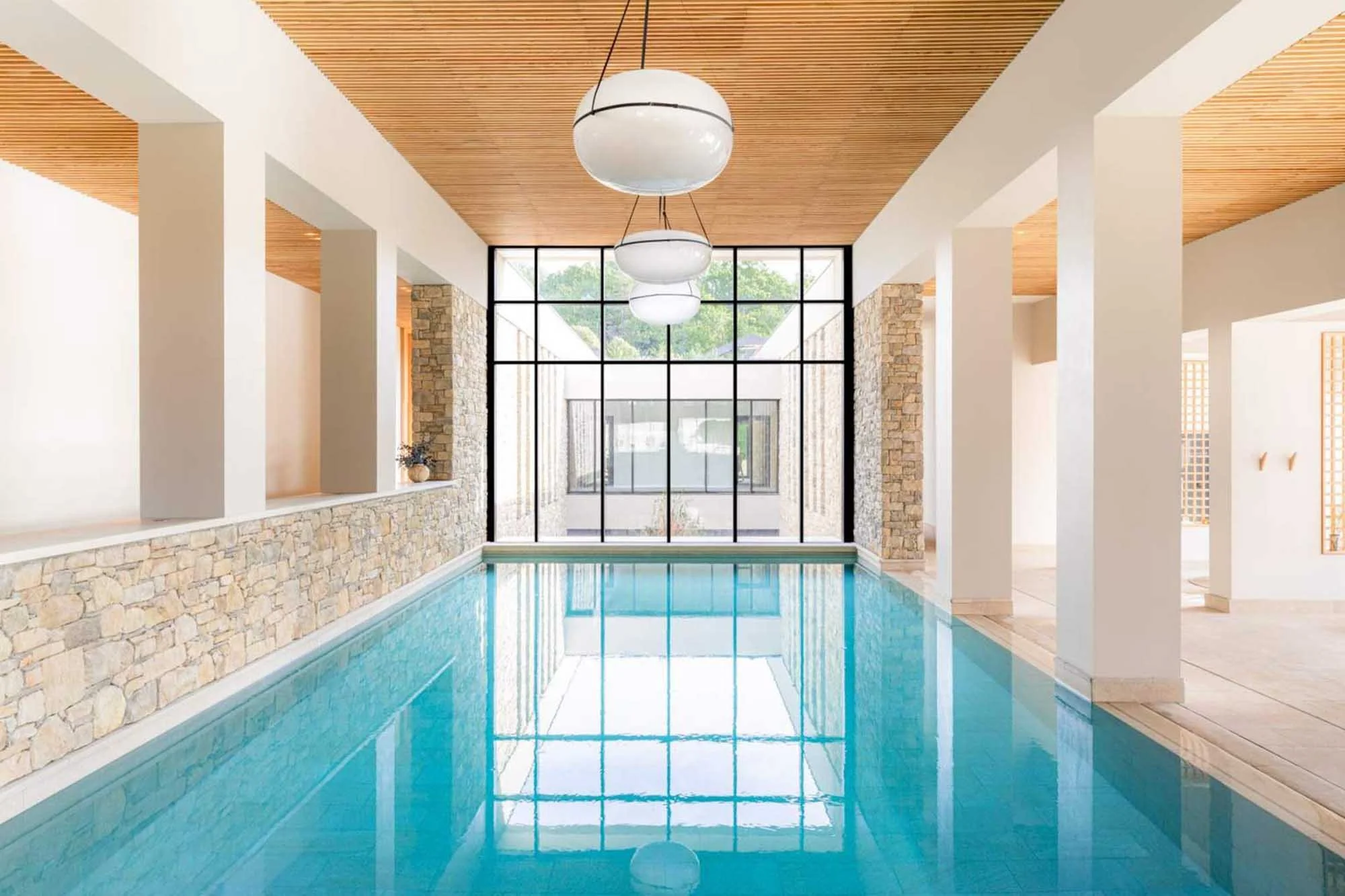
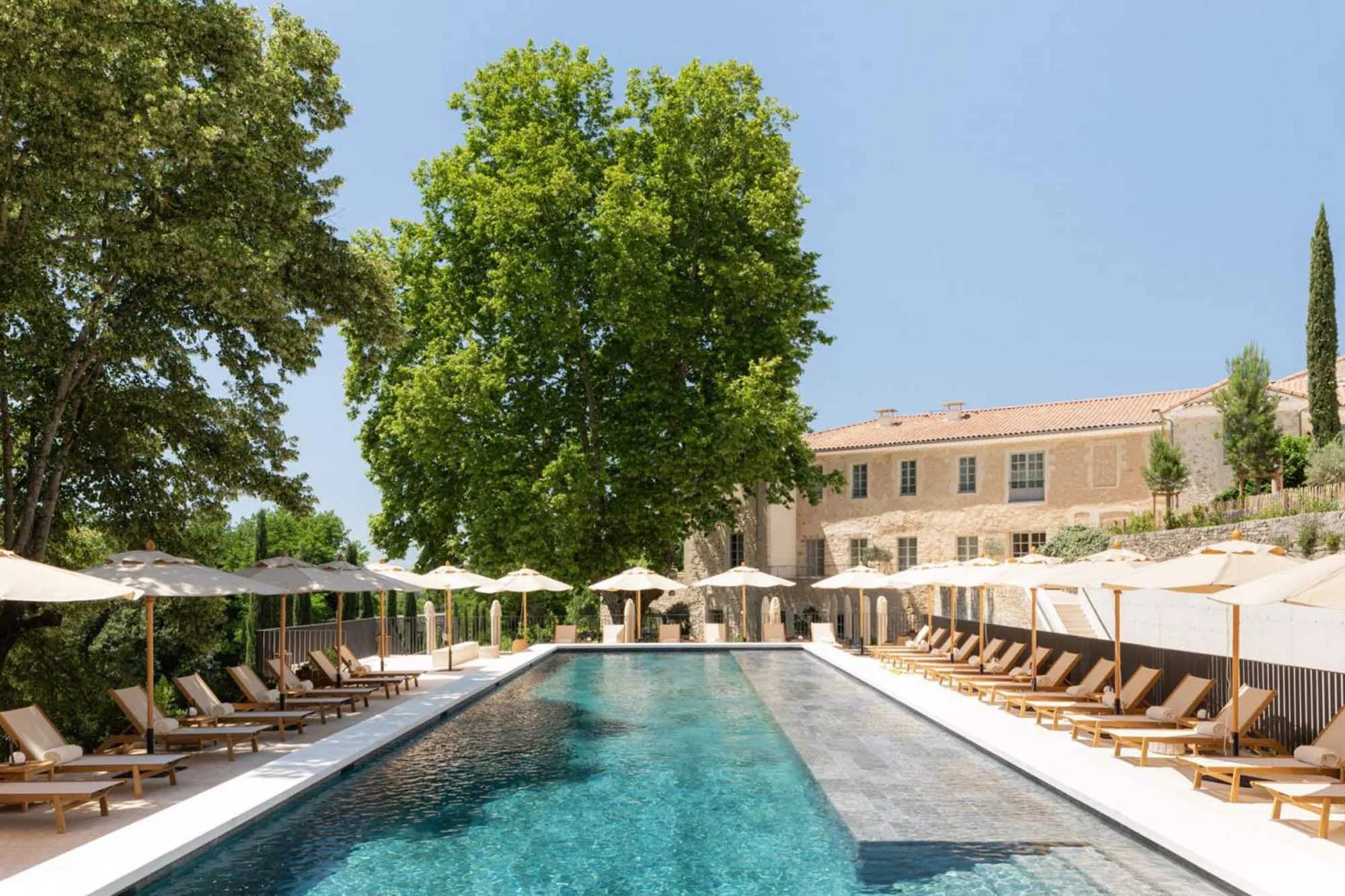
Pictures: Le Couvent des Minimes
