
Forestis Hotel: Where Design Shapes the Way You Spend Time
Set high above the Puster Valley, Forestis approaches hospitality from a position of clarity rather than excess. Located at 1,800 metres in the South Tyrolean Alps, the hotel is shaped by its environment – altitude, forest, light – and by a conscious decision to reduce rather than embellish. Forestis does not attempt to reinterpret alpine tradition, nor does it compete with contemporary spectacle. Its appeal lies in how consistently design decisions translate into a specific way of living, even if only for a few days.
A Setting That Establishes Pace
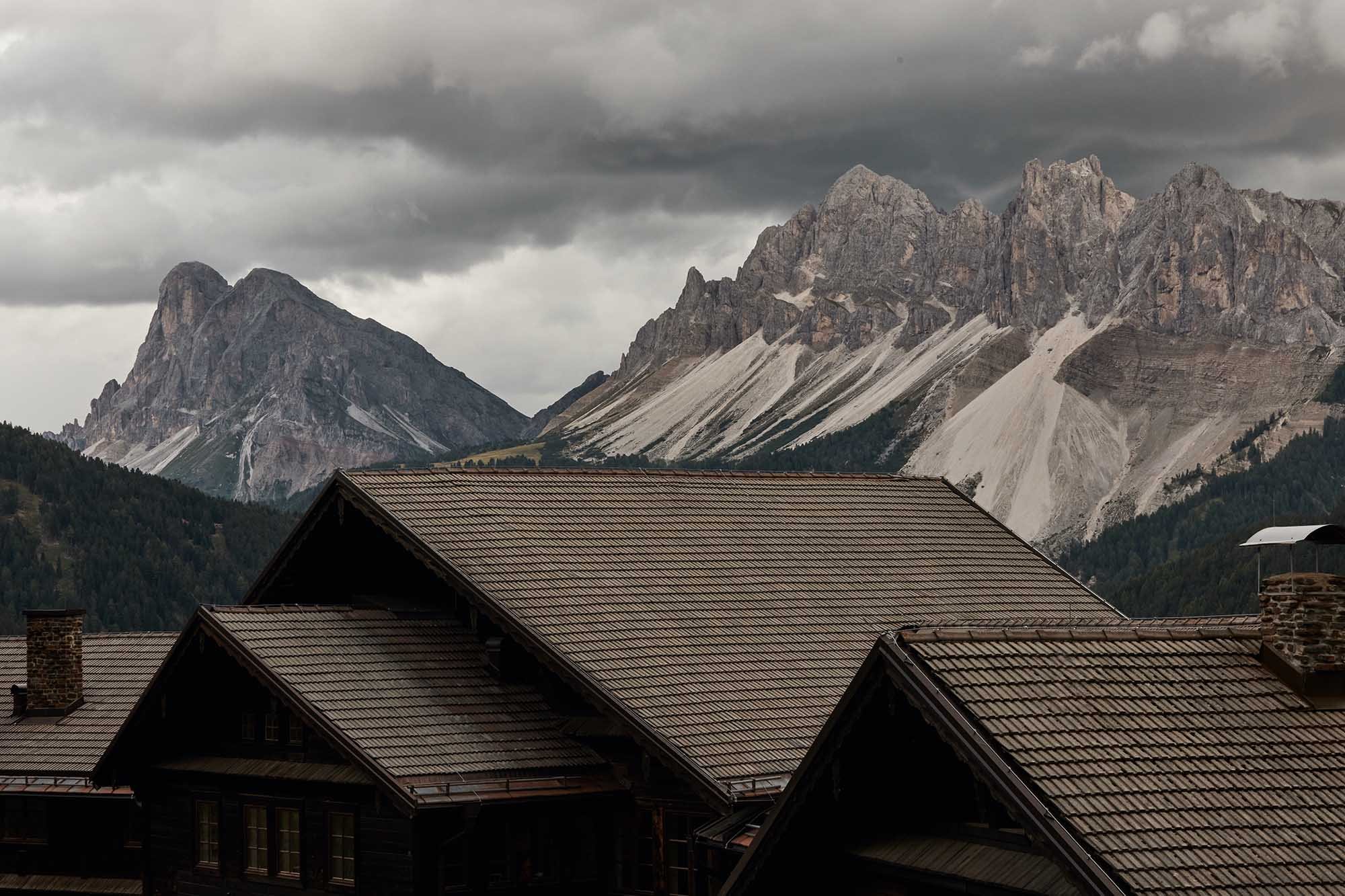
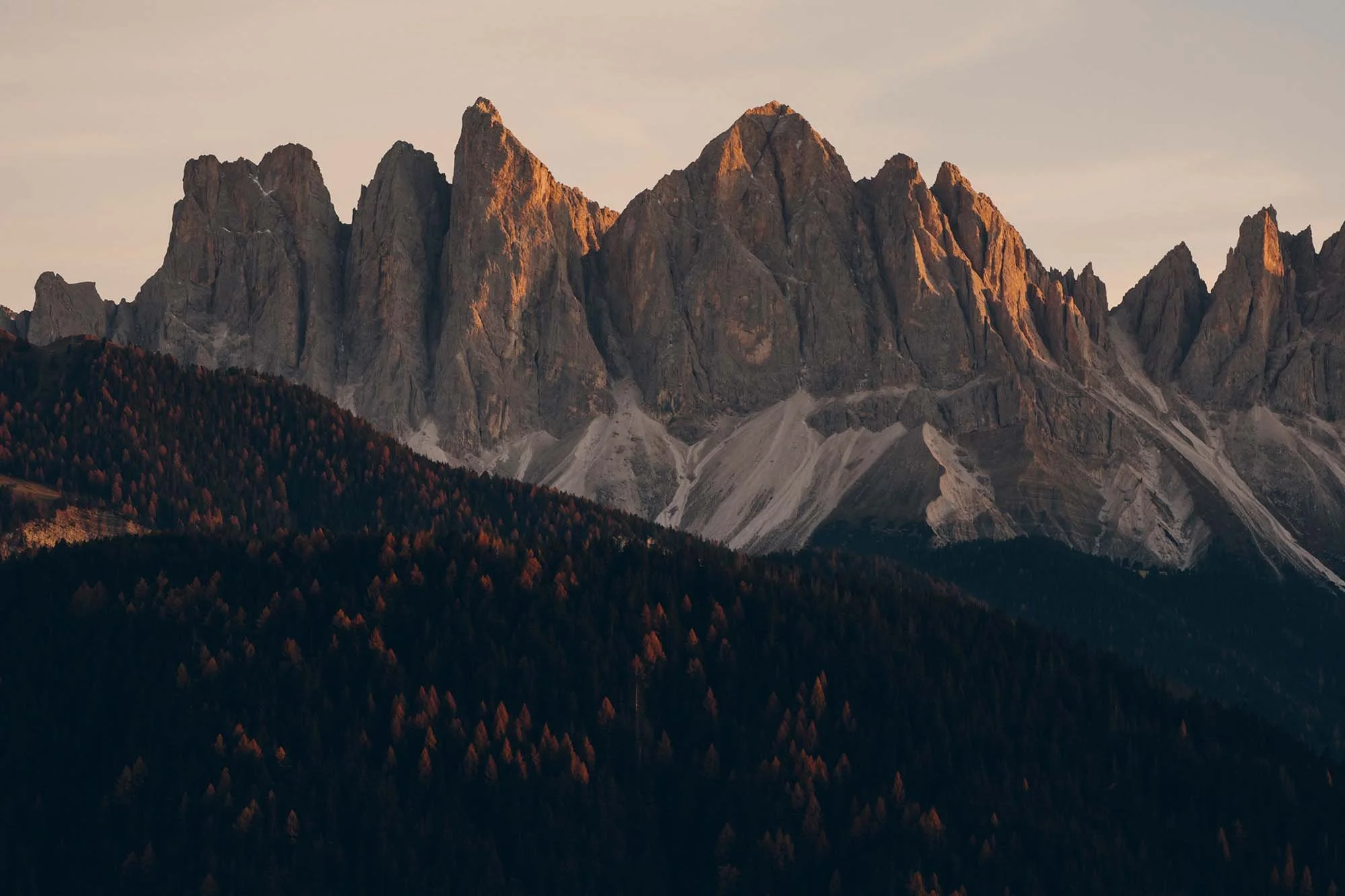
The hotel occupies a former sanatorium site above Bressanone, facing the dramatic landscape of the Dolomites. The approach is deliberate. Distance from the valley below creates a sense of separation that quickly alters daily rhythm.
Once on site, the forest absorbs sound and movement. Views extend across the mountains, but the immediate surroundings remain quiet and contained. The setting encourages stillness without presenting itself as retreat theatre.
Architecture That Stays in the Background
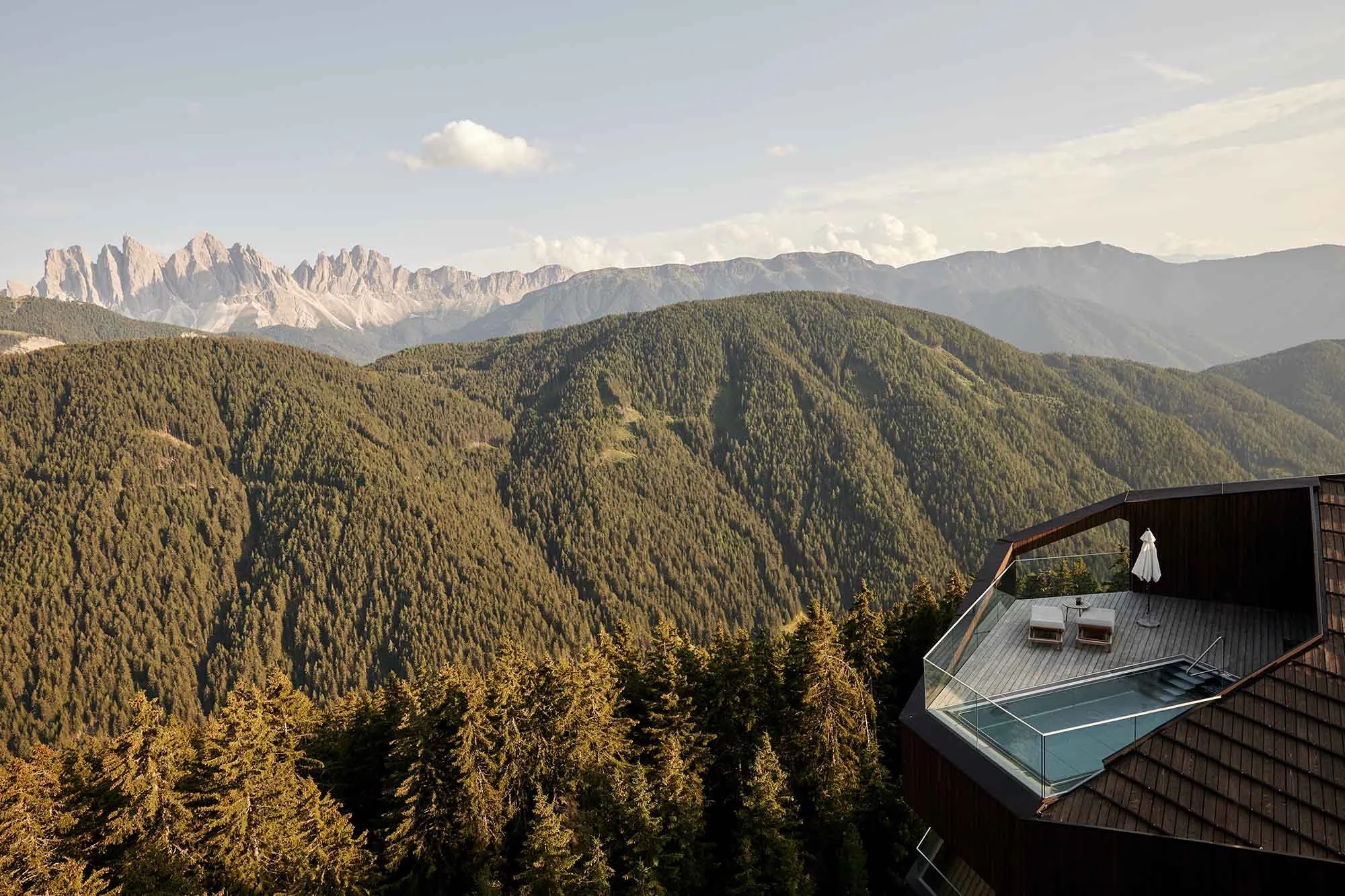
Forestis is composed of three slender towers rising vertically from the forest floor. Their form mirrors the surrounding trees, creating continuity rather than contrast. Materials are local and restrained – stone, wood, glass – used for durability and atmosphere. The architecture frames the landscape, controls light and creates a sense of order that carries through the entire stay.
Interiors Designed for Use
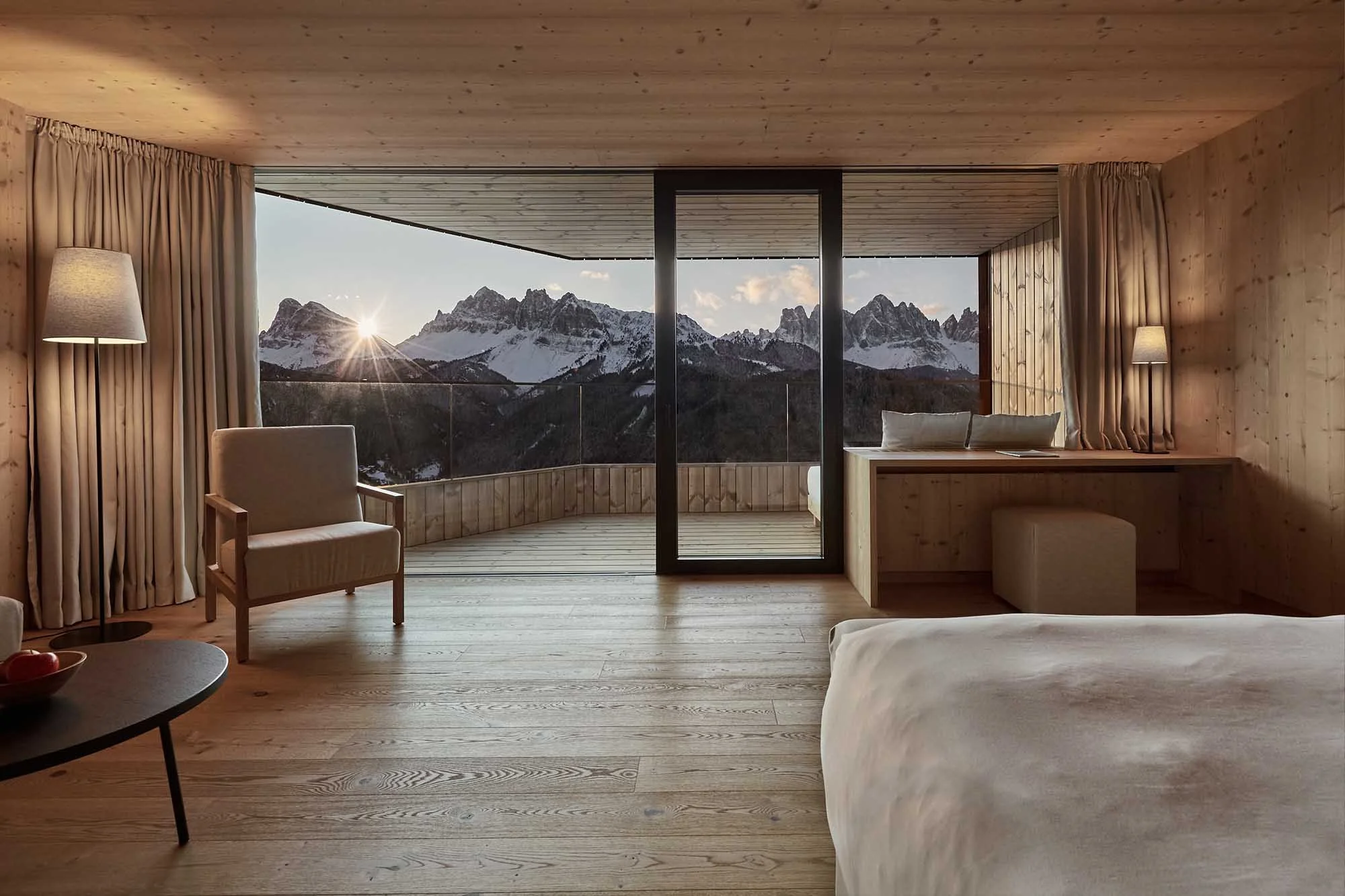
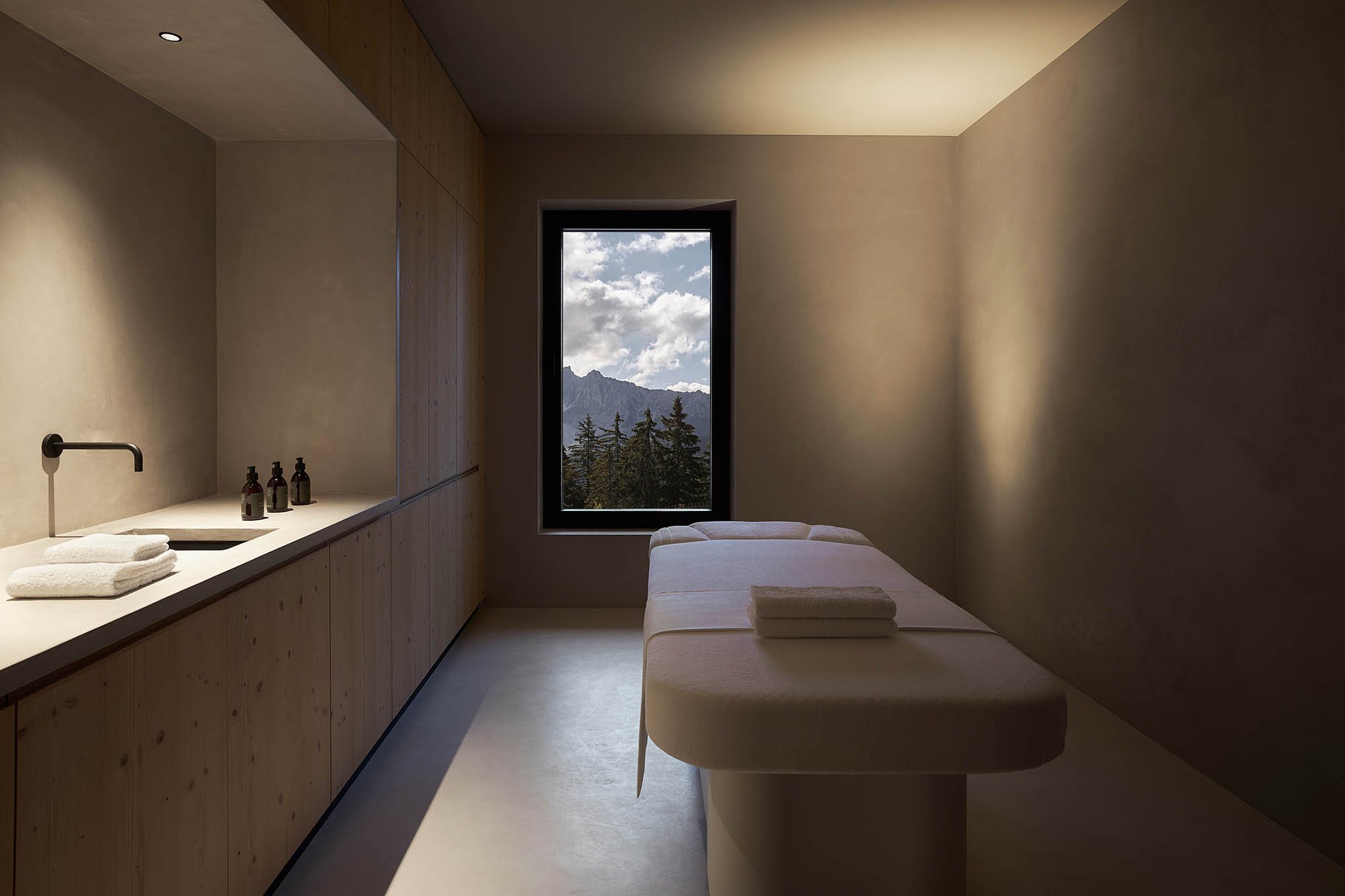
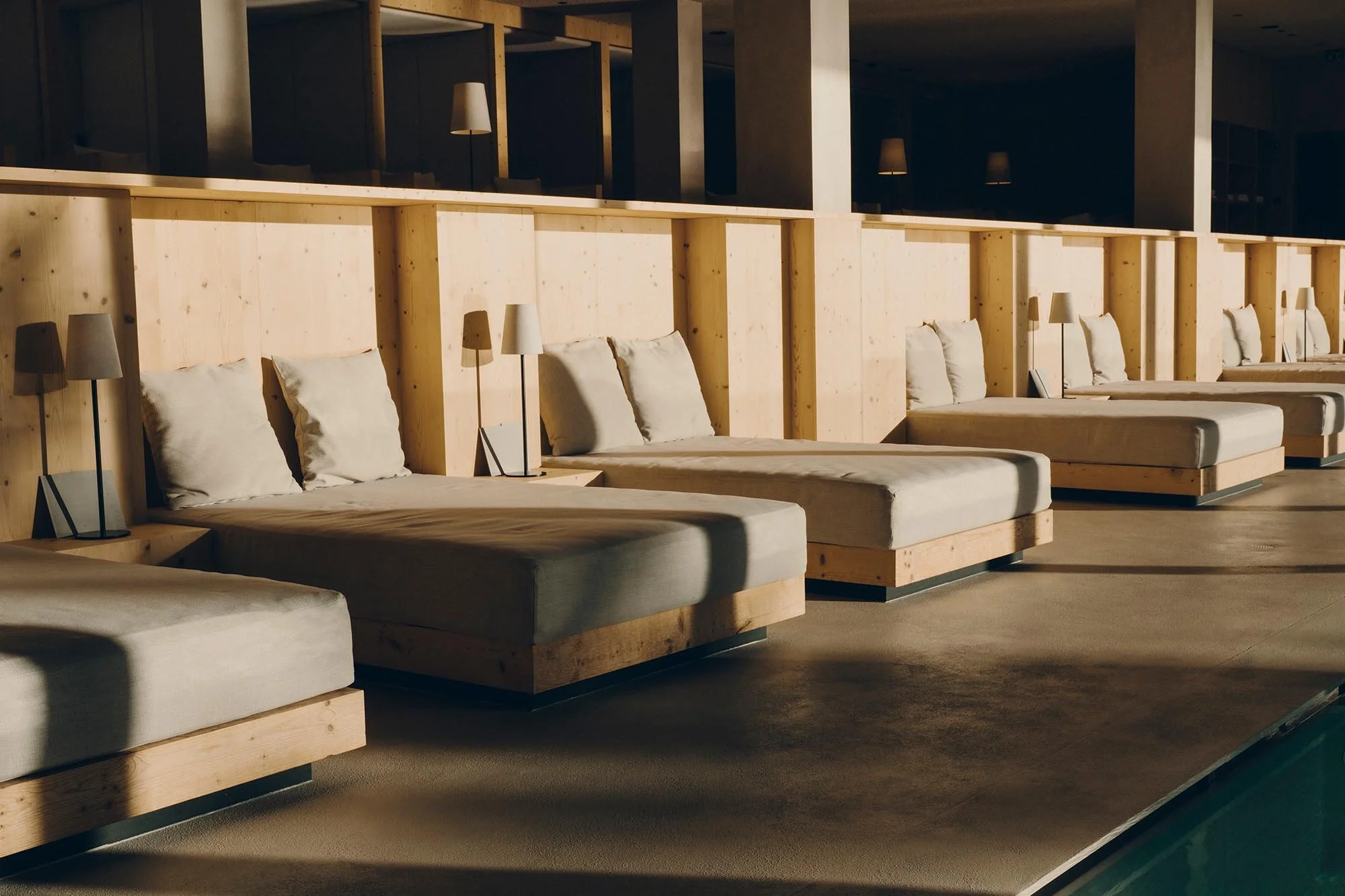
Rooms and shared spaces prioritise proportion, light, and orientation. Large windows establish a constant visual relationship with the landscape, while interiors remain intentionally quiet. Furniture is custom, understated, and functional. Colours are drawn from the surrounding environment, creating a sense of continuity without imitation.
Wellness as Part of the Daily Flow
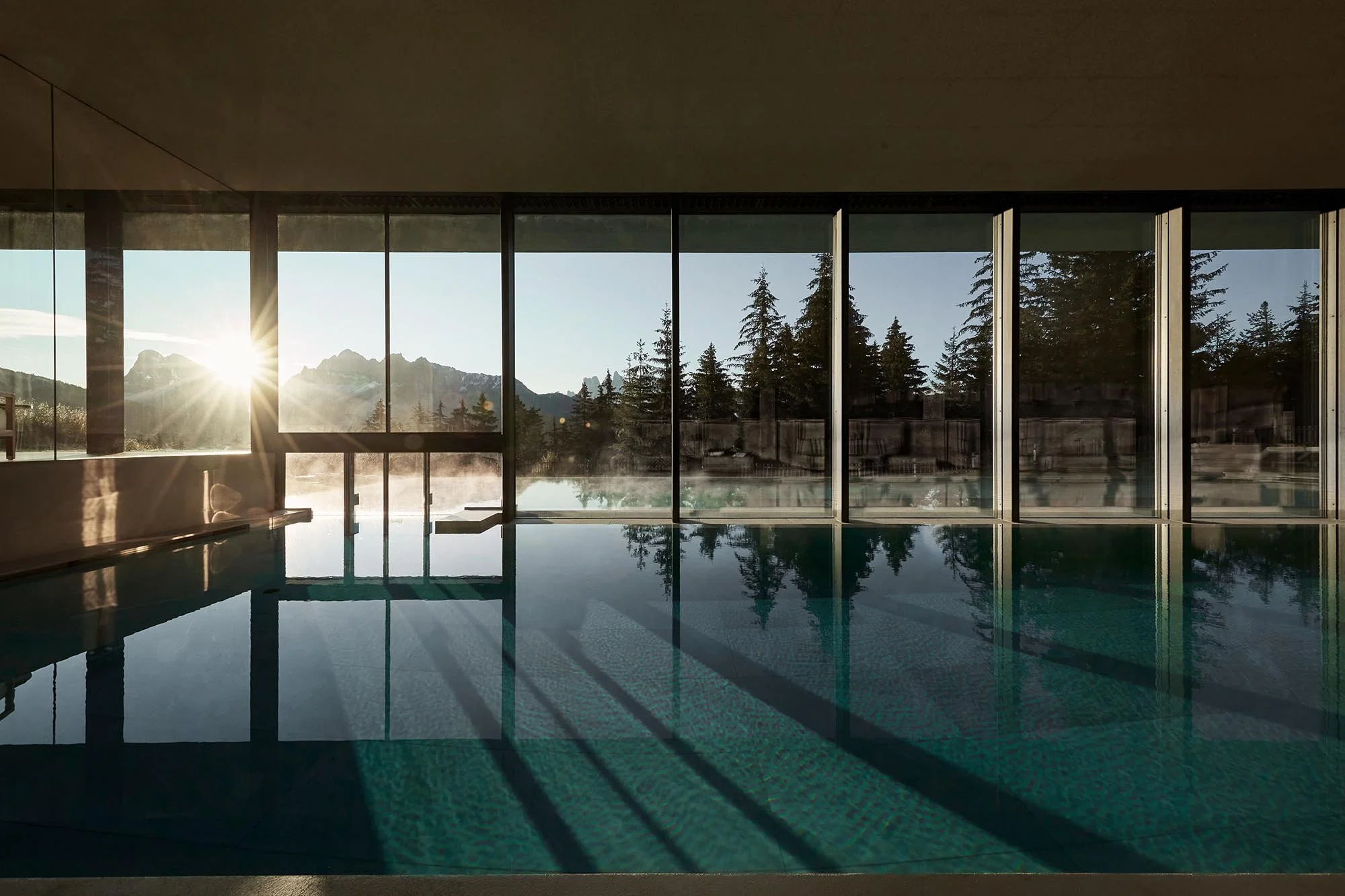
The spa is integrated into the overall architecture rather than treated as a separate destination. Pools extend toward open views, encouraging slow, unstructured use. Saunas open onto the forest, reinforcing the connection between inside and outside. There is no emphasis on schedules or programming. Guests tend to move at their own pace, often returning to the same spaces throughout the day. The experience feels continuous rather than curated.
Dining That Reflects the Place
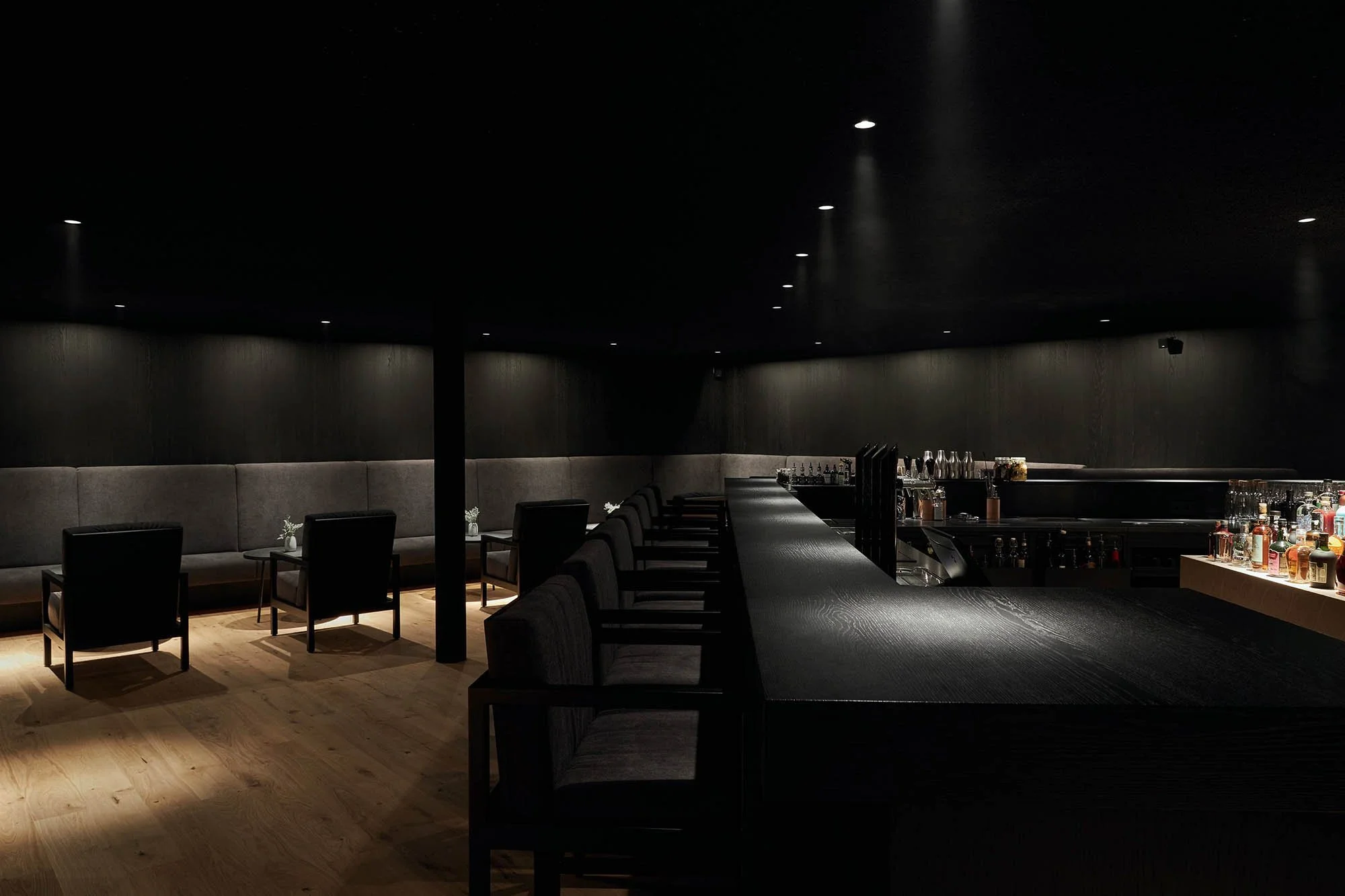
The culinary offering follows the same principles of restraint and regional focus. Ingredients are sourced locally, menus change with the seasons, and presentation remains disciplined. Dining spaces are calm and well proportioned, designed to encourage long meals rather than quick turnover. Meals feel integrated into the day, not staged as events.
Who Forestis Appeals To
Forestis attracts guests who value design as a way of structuring experience rather than as an aesthetic statement. Architects, designers, and design-literate travellers will recognise the consistency behind the project. It is not a hotel for social scenes or itineraries. It is a place for those comfortable with quiet, routine, and a slower pace shaped by space rather than programming.
Why Forestis Fits the Moment
Forestis reflects a broader shift in contemporary hospitality – away from stimulation and towards environments that support focus, rest and continuity. Its strength lies not in novelty, but in how seamlessly architecture, landscape, and daily life align. Rather than offering escape, Forestis provides a controlled setting in which time feels deliberately spent.
Pictures: Forestis
