
Material and Memory: Why the Objects We Live With Stay With Us
An editorial essay on materiality, memory and why timeless design is shaped as much by use as by intention.
Design rarely announces itself when it matters most. It enters quietly – through touch, repetition, proximity. A table worn smooth where hands return each day. A ceramic cup marked by a fine crack that never quite disappears. Stone steps softened not by intention, but by time. These objects do not impress. They endure.
In an era where design is increasingly measured by immediacy – launches, seasonal aesthetics, visual impact – we are surrounded by things designed to be seen rather than lived with. Novelty has replaced permanence. Appearance has overtaken attachment. And yet, the objects that stay with us longest are rarely the newest.
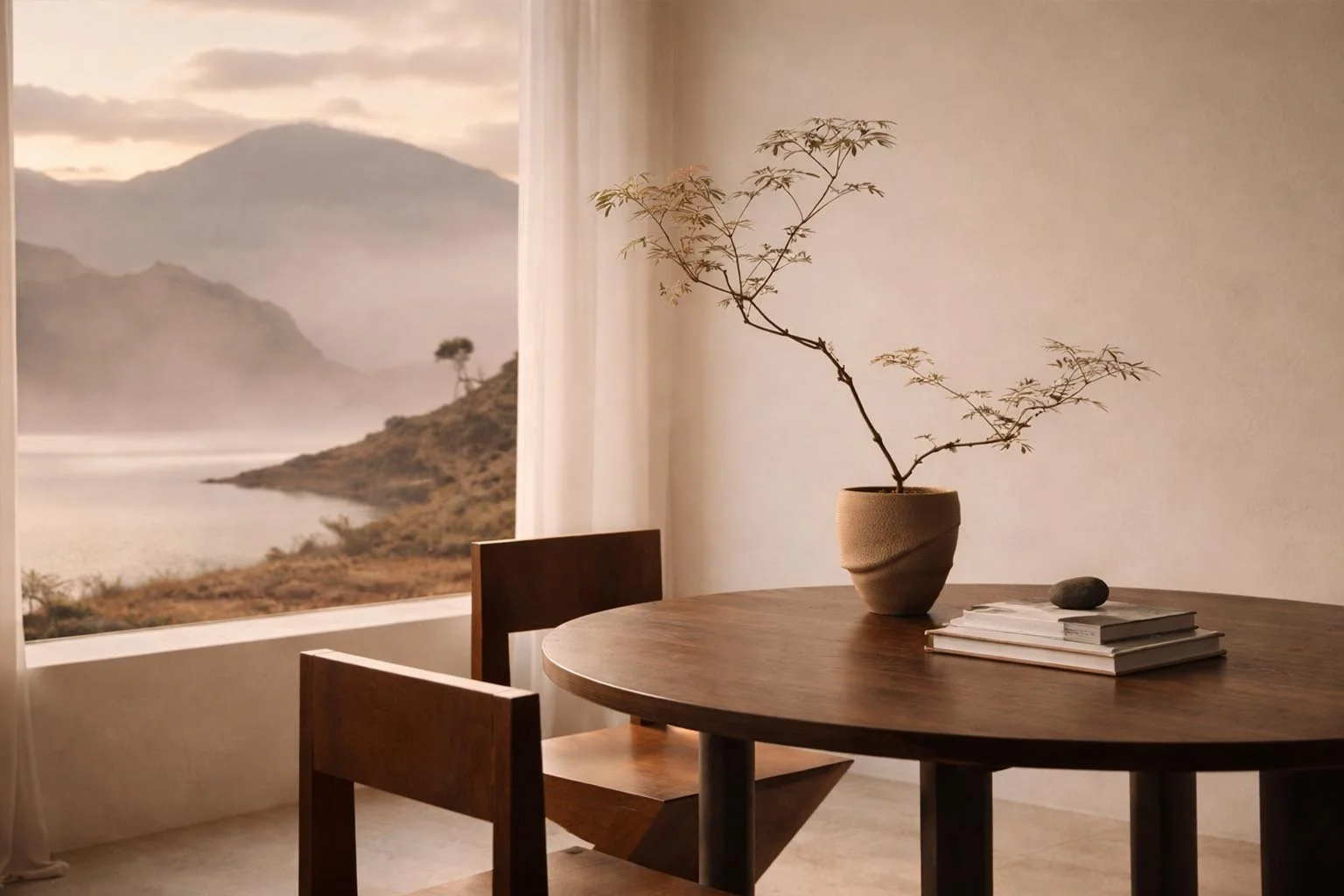
The problem with disposable design
Contemporary design culture moves fast. Faster than materials can age. Faster than spaces can settle. Faster than habits can form. Objects are introduced, replaced, and forgotten with remarkable efficiency. Their value lies in how they look at first glance – not in how they behave over time. They photograph well, but participate little. This cycle produces abundance, but not meaning. Design that lasts follows a different logic. It allows time to take part.
Material as memory
Materials carry memory long before we do. Wood absorbs touch. Stone records movement. Leather darkens where it is held. Linen softens where it is used. These changes are not flaws, they are evidence. Patina is not decay. It is collaboration. When a material is allowed to age, it becomes a record of living. The object shifts from something designed to something shared. Use becomes meaning. Time becomes a co-author. This is why certain objects resist replacement, even when alternatives are newer or technically superior. Their value is no longer functional or aesthetic alone – it is personal. Memory lives in surfaces.
Designing beyond perfection
Many designers who work with restraint understand this instinctively. They choose materials not for uniformity, but for character. They allow irregularity. They design for repair rather than replacement. Perfection, once achieved, has nowhere to go. Imperfect materials evolve. Design that acknowledges ageing does not resist time – it welcomes it. It assumes an object will be touched, moved, and lived with. That it will change. This approach requires confidence. It resists trends. It values longevity over immediacy. And it trusts the person who lives with the object.
Objects do not exist alone
No object exists in isolation. A chair is shaped by the room it inhabits. A table by the conversations it supports. A lamp by the hour it is switched on each evening. Design gains meaning through rhythm. This is why certain spaces feel grounding even when furnished simply. Stillness is not created by absence, but by alignment – between material, proportion, and use. Homes that feel considered are rarely over-designed. They are composed gradually. Objects arrive, remain, and earn their place. Design, at its most effective, disappears into daily life.
Why we keep what we keep
The objects we keep are rarely the most impressive. They are the most familiar. They stay because they hold memory – not metaphorically, but physically. Through wear. Through weight. Through touch. Good design does not demand attention.
It supports life quietly. In a culture of constant replacement, choosing objects that age with us is a deliberate act. It reflects a belief that design is not about statements, but about continuity. Material is memory waiting to happen. And the most meaningful objects are the ones that stay long enough to remember us back.
