The Quiet Edit: How Light, Material, Colour and Form Shape Atmosphere
THE VARE STUDY
Editorial explorations of architecture, design and contemporary living.
In a world defined by constant stimulation, the most memorable spaces are often the quietest. They don't rely on ornament or excess. Instead, they create atmosphere through proportion, materiality, light and carefully considered colour. Every surface has a purpose. Every shadow contributes to the composition. Even colour, when introduced with restraint, becomes part of the architecture rather than an addition to it. Minimalism has never been about absence. It has always been about intention.
Beyond Architecture
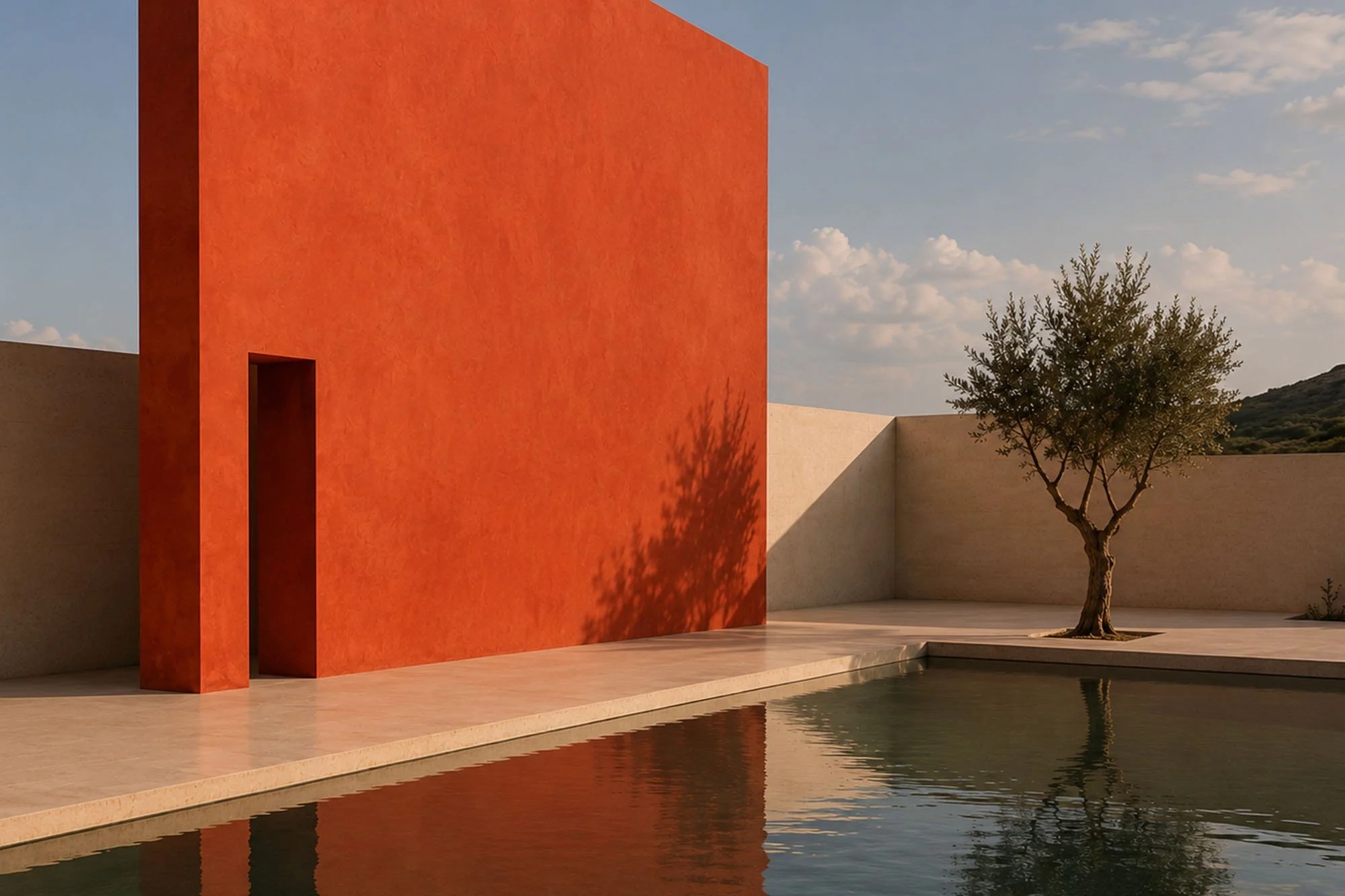
The Quiet Edit explores architecture not as a destination, but as an experience. Rather than documenting existing places, this editorial series investigates the relationship between light, material, colour and form through conceptual imagery. Each composition explores atmosphere, proportion and emotion, inviting the viewer to focus not on location, but on perception. Architecture is often remembered less by its function than by the emotions it leaves behind. A corridor filled with morning light. The cool texture of natural stone. A reflection moving across still water. Sometimes, these quiet moments become the strongest memories.
Material as Atmosphere
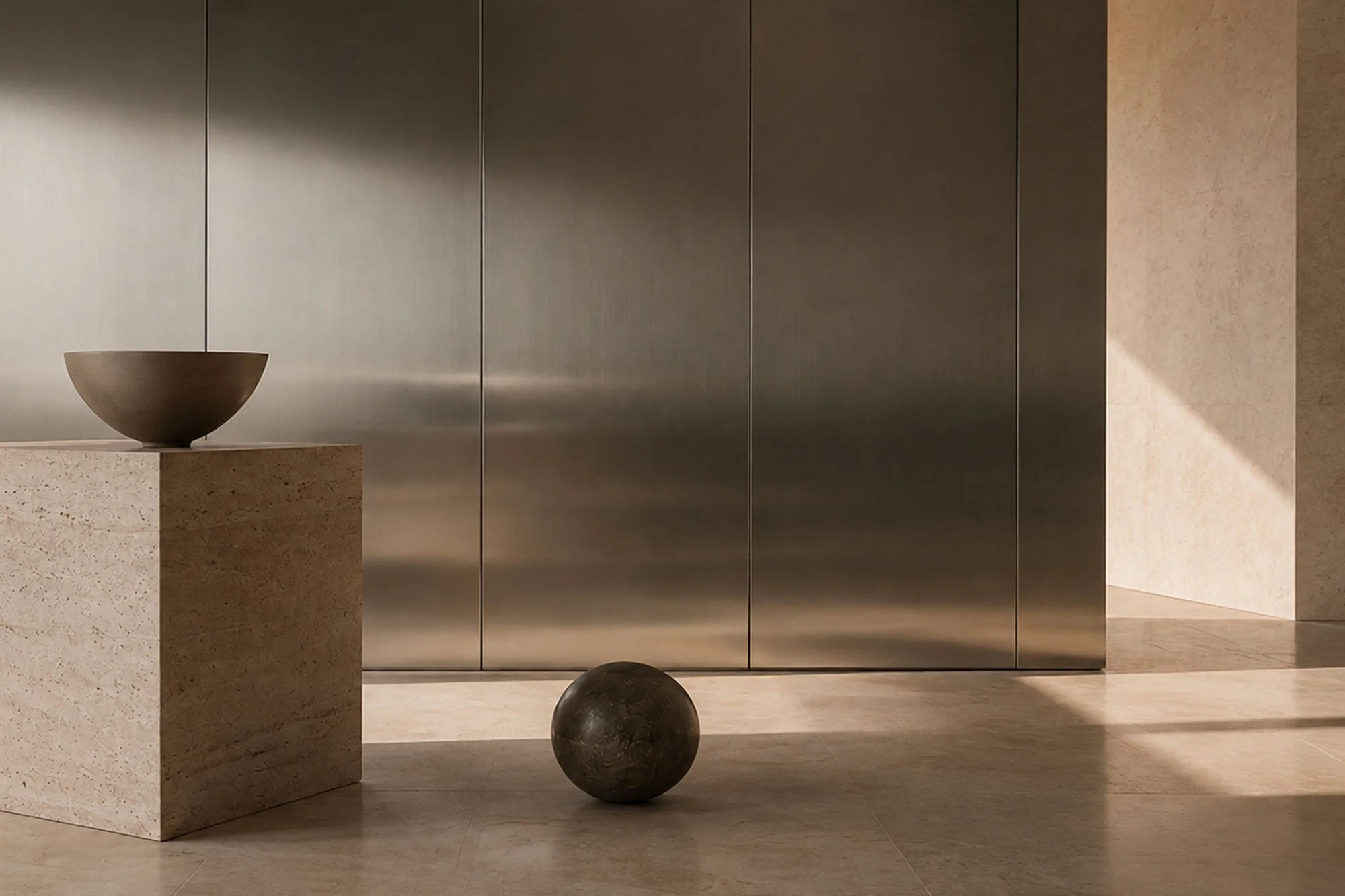
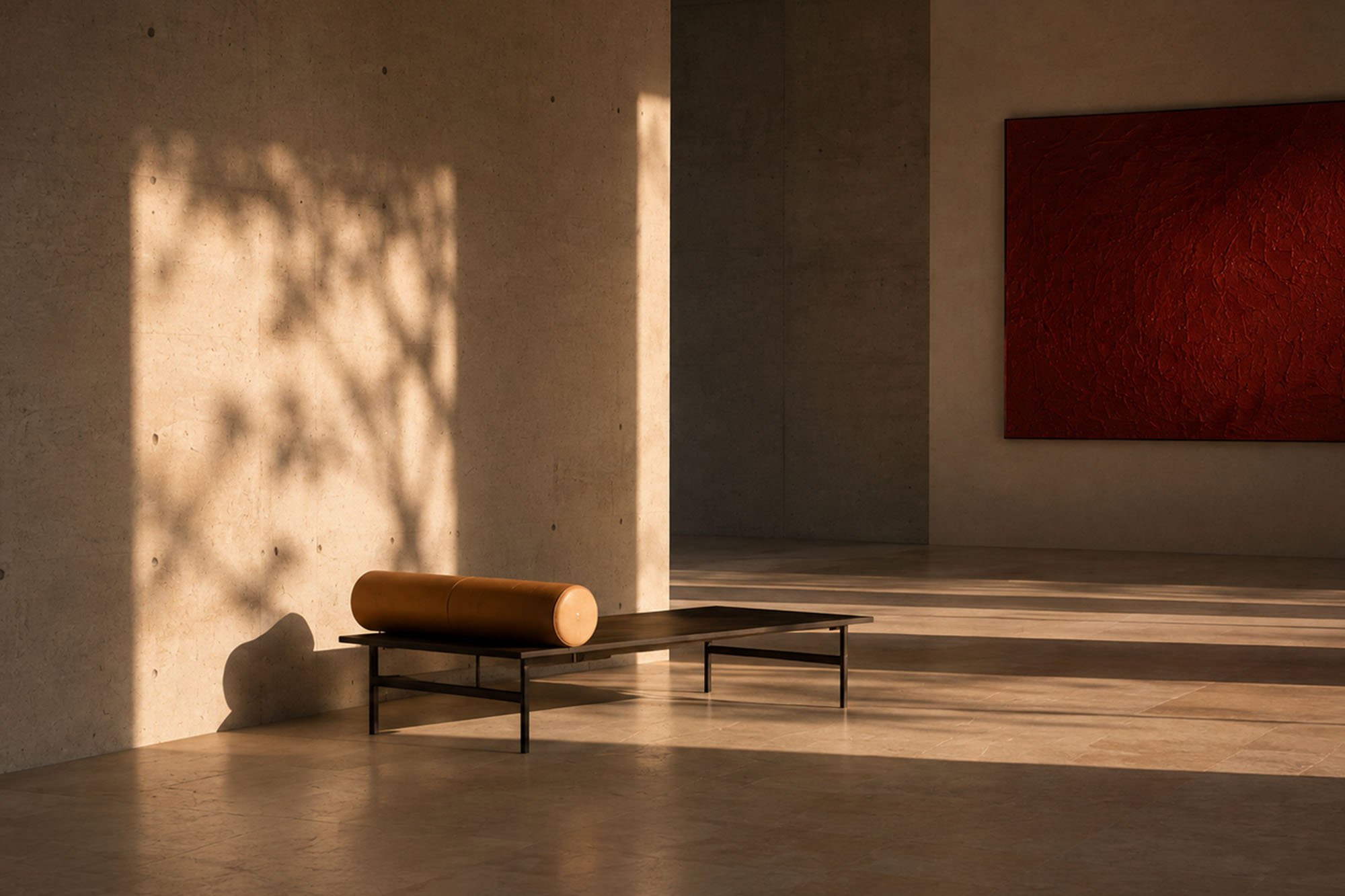
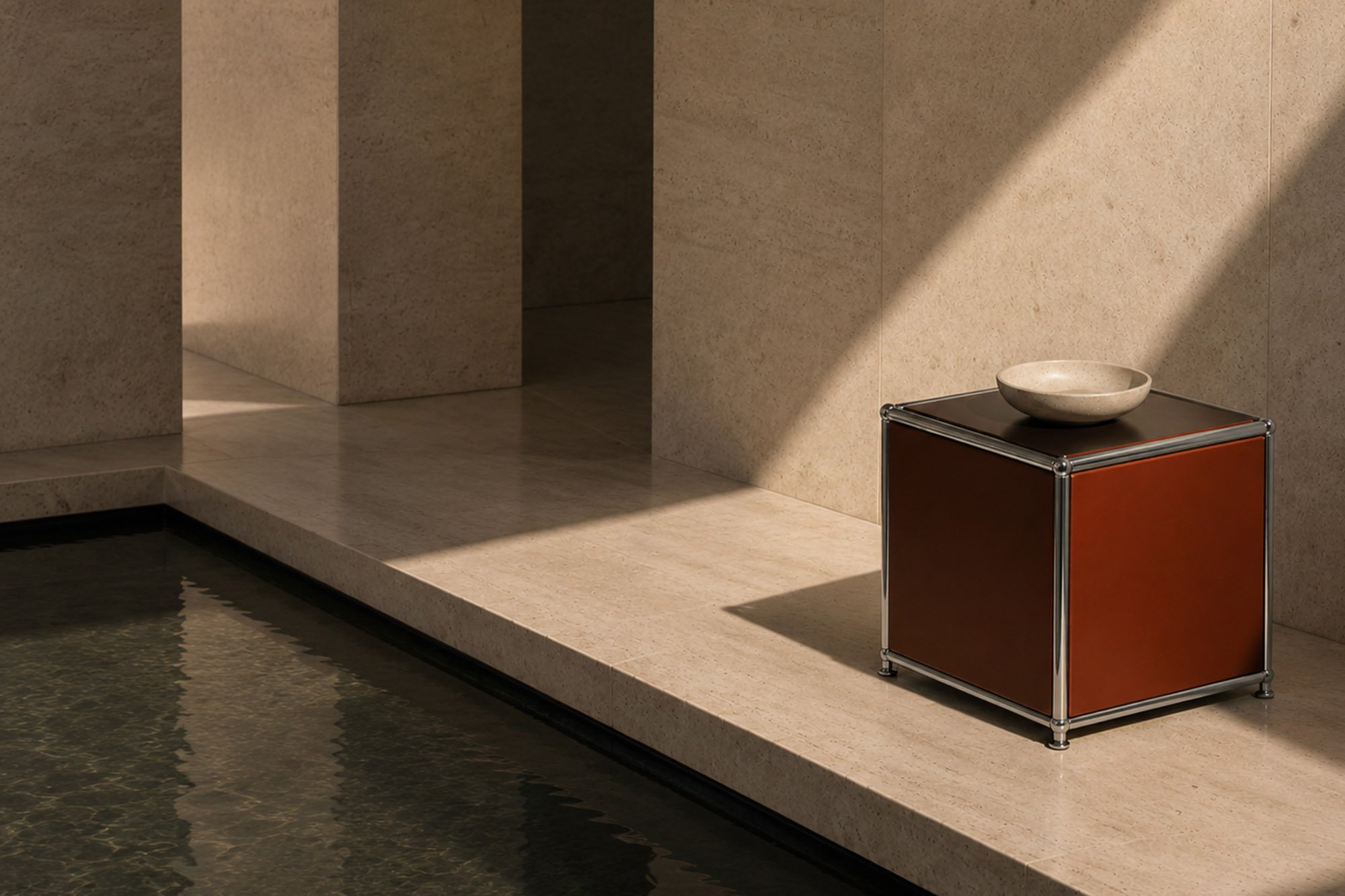
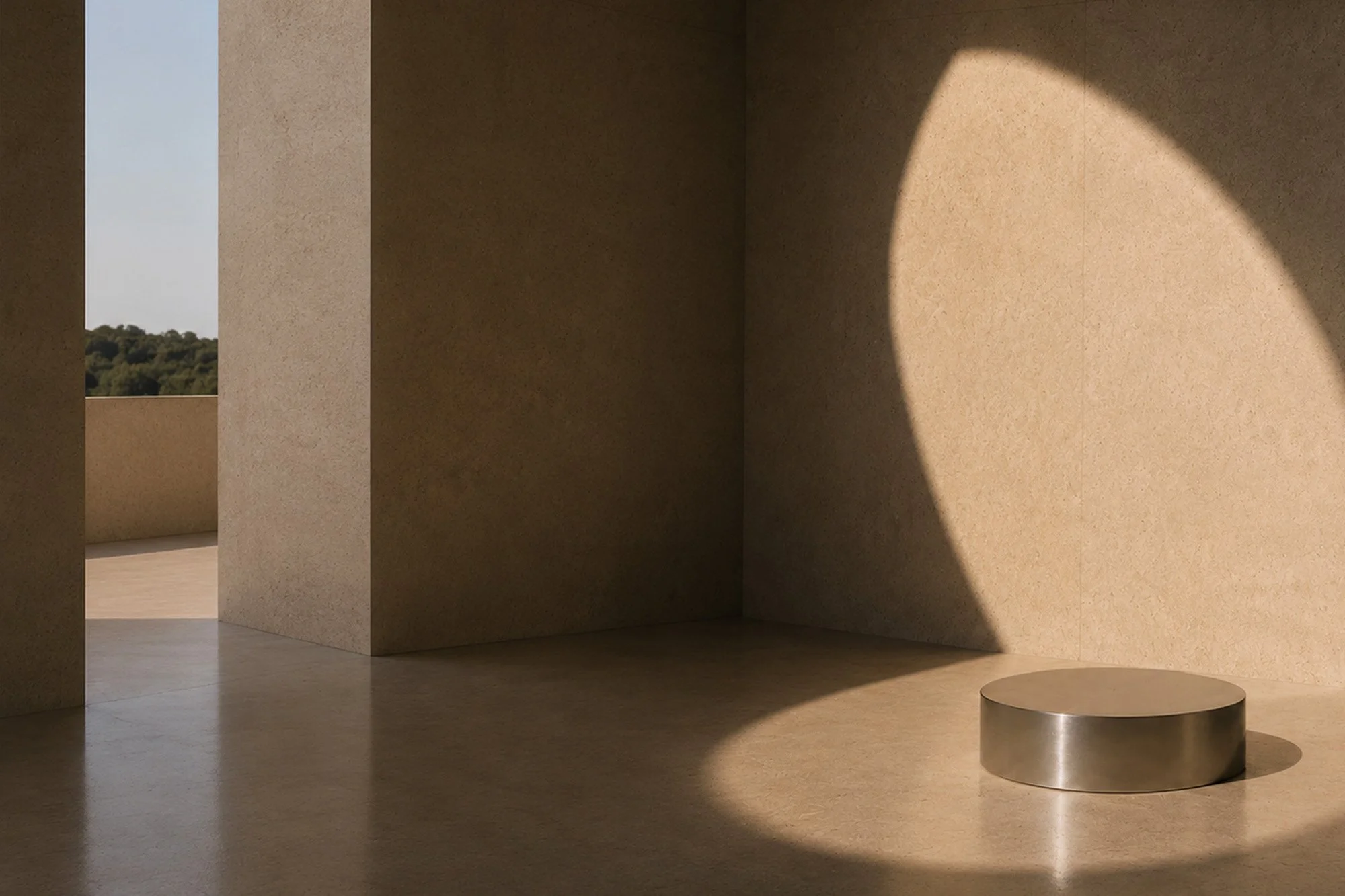
Materials shape the emotional language of a space long before furniture or decoration do. Travertine introduces warmth through its natural texture. Brushed aluminium reflects light with subtle precision. Concrete provides calm. Water introduces movement without demanding attention. Each material speaks differently. Together, they create a visual rhythm built on balance rather than contrast. This is where contemporary architecture becomes timeless.
The Architecture of Light
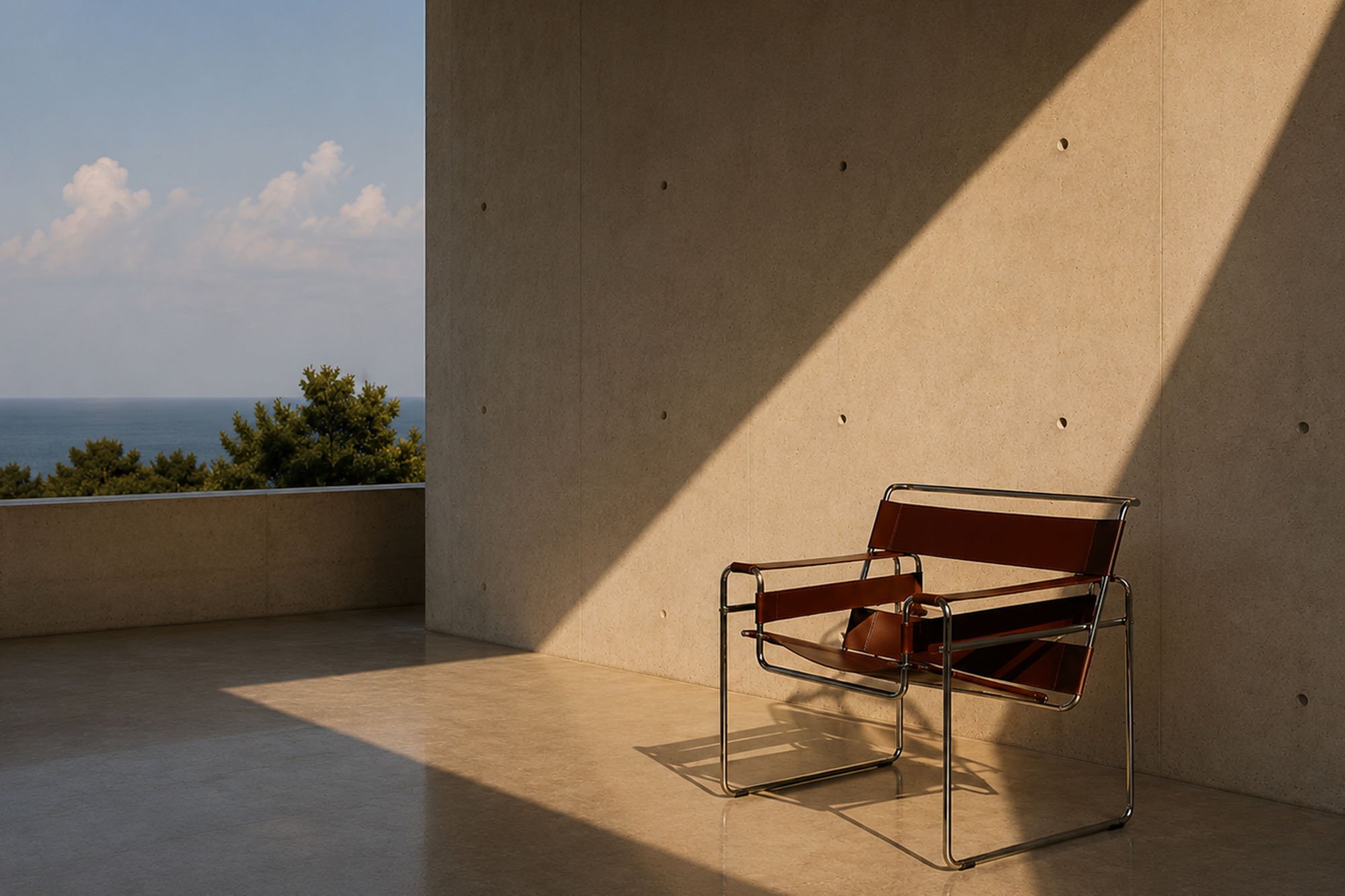
Light is perhaps the only architectural element that is constantly changing. As the day unfolds, it redraws surfaces, softens edges and reveals textures that were invisible only moments before. Without altering a single wall, it transforms the atmosphere entirely. The most memorable spaces are never static. They evolve with time.
Colour with Intention
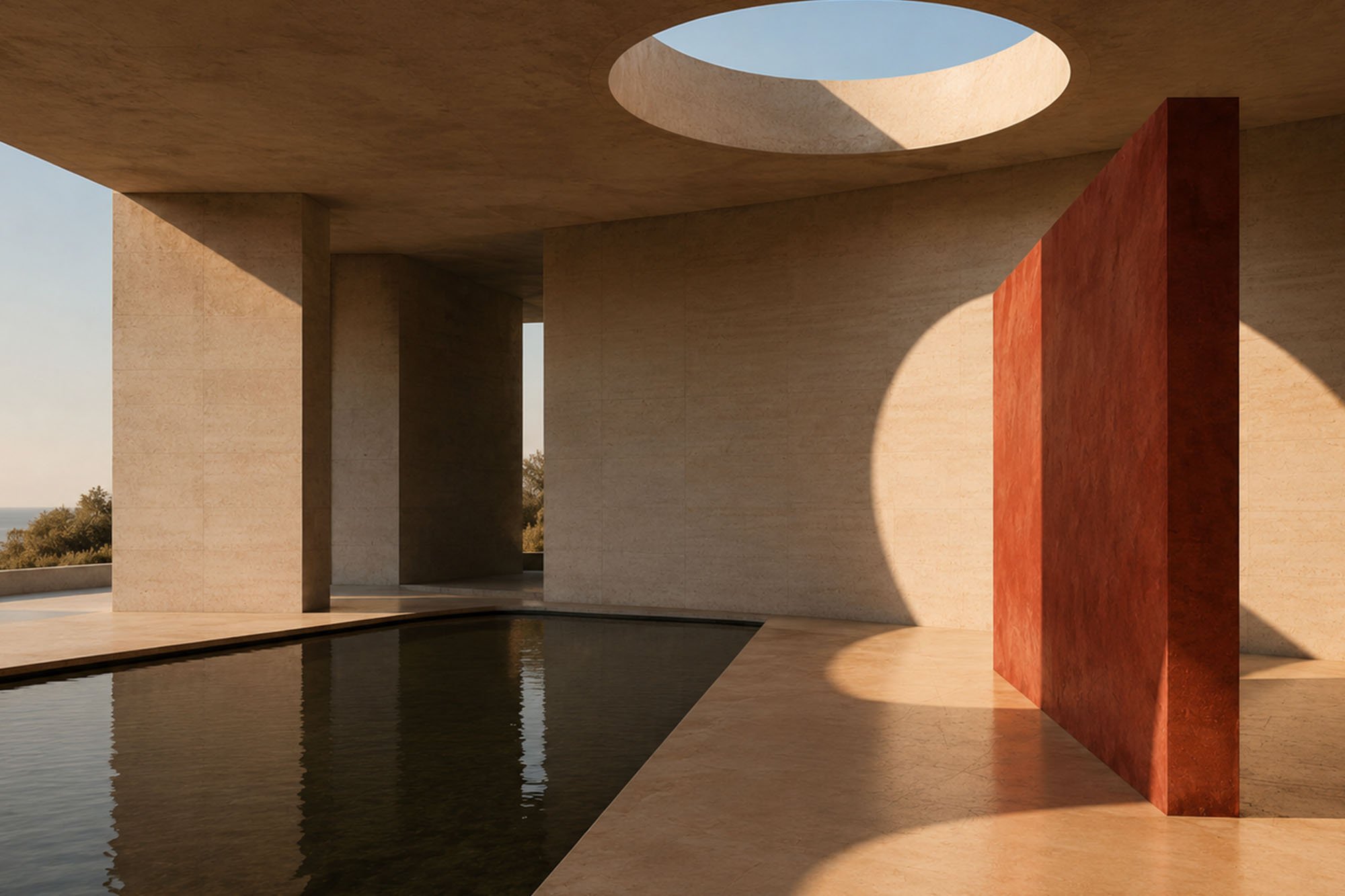
In restrained architecture, colour becomes more powerful when used sparingly. A terracotta plane introduces warmth. A deep burgundy surface creates depth. A subtle accent shifts the entire composition. Rather than functioning as decoration, colour becomes an architectural gesture. It establishes rhythm, guides the eye and creates moments of tension within otherwise quiet environments. Surrounded by natural materials and generous negative space, even the smallest colour intervention can define an entire atmosphere.
Imagining New Spaces
Architecture has always been an expression of possibility. Today, conceptual visualisation allows designers to explore ideas beyond physical limitations, offering new ways to investigate proportion, atmosphere and spatial composition. These spaces are not intended as architectural proposals, but as visual essays inviting curiosity, reflection and new perspectives. Their value lies not in whether they can be visited. It lies in the emotions they evoke and the conversations they inspire.
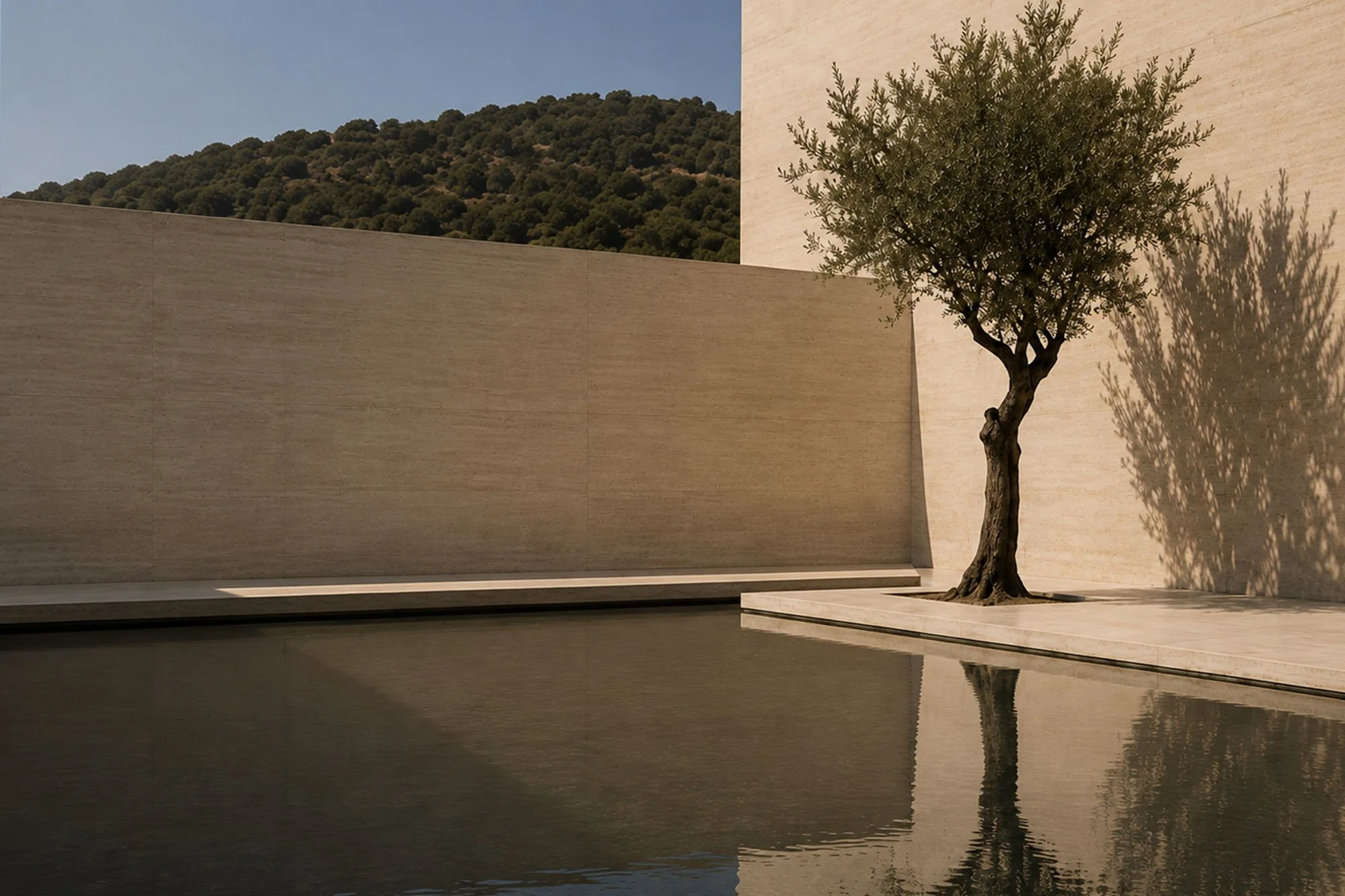
The Quiet Edit
The Quiet Edit is an ongoing editorial series by The Vare, exploring contemporary architecture through light, material, colour and form. Each edition investigates how thoughtful composition can shape atmosphere, evoke emotion and encourage a slower, more intentional way of looking. Because sometimes the most meaningful places are the ones that exist only in our imagination.
Pictures: Conceptual imagery created with AI. Curated by The Vare.
